
Cab Franc Chronicles – Your source for all things Cabernet Franc!
——————–
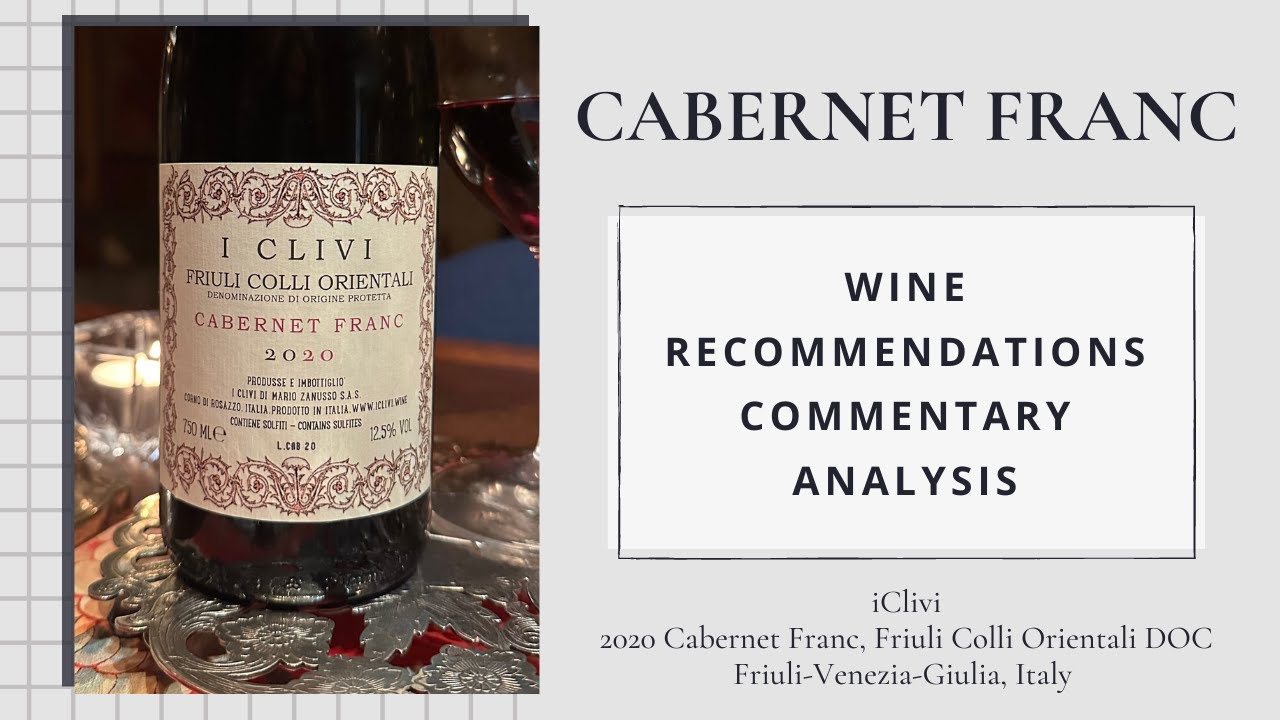
Analysis and commentary of the iClivi, 2020 Cabernet Franc, Friuli Colli Orientali DOC, Friuli-Venezia-Giulia, Italy
The story of iClivi begins in the mid-1990s when Mario Zanusso’s father, Ferdinando, purchased two vineyards in Friuli-Venezia-Giulia around the area of Cormòns, choosing the path of the vine after 30 years of living and working in Africa. Mario quickly fell in love with the beauty of the area and made the decision to join his father, and together they built iClivi into what is one of Friuli’s great boutique estates focusing on showcasing the unique terroir of their regions through the finished wines.
Today, Mario is organically farming around 20 hectares of vines in the Friuli Colli Orientali DOC and the Collio DOC that are predominantly white varieties native to Friuli. When I asked Mario about the back story of his Cabernet Franc, he shared with me that in recent years he was looking to add to his range of red wines, and Mario was particularly drawn to Cabernet Franc for its long history in the region, as well as the grape’s finesse and spicy aromatics. He also shared that after finding the right vineyard, it took him a while to, in his own words, “mature a personal take on Cabernet Franc.” And, the 2020 vintage marks the inaugural bottling for iClivi’s Cabernet Franc.
So the Friuli-Colli-Orientali DOC is tucked up in the northeast corner of Friuli-Venezia-Giulia, and this is primarily a white wine producing region, with the top 3 most planted grapes, Tocai Friulano, Pinot Grigio and Sauvignon Blanc, accounting for around 42% of the area under vine. Cabernet Franc is the 3rd most planted red variety, behind Merlot and Refosco dal , with around 102 hectares planted.
The region is situated in the eastern part of the Udine province. To the north and northeast, we have the Julian Prealps, which protect the region from the cold wines. The Friulian Plain to the west brings warmer air, and the Adriatic Sea, which is about 40km to the southeast, brings constant breezes to provide essential ventilation to the vineyards.
The region experiences a relatively high amount of precipitation throughout the year, around 1500mm, with rainfall during the growing season ranging from 700mm to 950mm. Generally speaking, conditions are cooler and wetter in the northern part of the region, with warmer and drier conditions in the southern part of the region.
The vineyards weave their way down a narrow band of land in the lower foothills of the Prealps, alternating between hills and valleys, intermingling with forests. This means that we will find any number of exposures across the region. In terms of elevation, the vineyards typically lie between 100m and 350m above sea level, and are planted on terraced slopes or slightly lower-lying gentler slopes.
In terms of soils, what defines the region is the presence of flysch, which is known locally here as ponca. Flysch is alternating layers of marl, a type of calcareous-clay, and sandstone, which is dense and brittle, and offers excellent drainage, which is important given the higher precipitation the region experiences.
The vines are planted for today’s wine, we are in the municipality of Buttrio, in the southwest part of the region. The vineyard is on a gentle slope, with a slight southeastern exposure, at an elevation of around 100m above sea level. In terms of soils, there’s about 1.5m of clayey topsoil over ponca. This is a block of about 1ha of Cabernet Franc vines that were planted in 1970.
The core tenants of Mario’s approach with his wines are focusing on low yields and taking a low interventionist approach in the cellar. For the 2020 vintage, the yield for the Cabernet Franc was about 5 tons per hectare, the fruit was all hand-harvested and destemmed. In the cellar, fermentation was in cement vats with indigenous yeast, and the fermentation temperature reached a maximum of around 25C. The total time on skins was around 10 day. The wine was aged in cement for around 12 months before bottling.
0:00 Intro/Overview
1:00 iClivi vineyards and Cab Franc backstory
1:51 Friuli Colli Orientali overview and location
3:11 Friuli Colli Orientali climate
4:15 Friuli Colli Orientali vineyard landscape
4:55 Friuli Colli Orientali soils
6:28 2020 Cabernet Franc – vineyard selection
7:59 Winemaking
9:02 Tasting notes
——————–
Website in progress with a full write up and tons more content.
Originally posted to Instagram February 4, 2024
——————–
Key wine facts below:
Producer: iClivi (Mario Zanusso)
Appellation: Friuli Colli Orientali
Commune: Buttrio
Soil: 1.5m of clayey topsoil over ponca (flysch)
Alcohol: 12.5%
———————
FOLLOW ME: Instagram:
#cabfranc #cabernetfranc #cabfrancchronicles #cabfrancdujour #iclivi #friulicolliorientali #friuli #friuliveneziagiulia #italianwine
Hi there Allison here with another cfour today’s wine is taking us to the FI K orientali Doc in Italy and we’re looking at the E 2020 Cabernet Fran the story of e begins in the mid 1990s when Mario Zeno’s fathered Ferdinando purchased two very old Vineyards in the
Eastern part of f Venezia Julia around the village of cormon choosing the path of the vine after 30 years of living and working in Africa one of The Vineyards Gala is located in the village of cor Roso which is in the FI K orientali Doc and the other Vineyard bratan which is
Just a few kilometers away is in the village of bratan De cormont and this is actually in the Kio doc now it didn’t take very long for Mario to fall in love with the beauty of the region and then he made the decision to join his father
And together they built e Cy into what is now one of fi’s great Boutique wine Estates focusing on showcasing their unique terar in The Finnish wines today Mario is farming around 12 hectars of vines and these are predominantly white wine varieties native to fi like toai
Fano R malvasi istriana Verdo Fano and a little pocket of Merlo now when I asked him about the backstory of his Cabernet Fran he shared with me that in recent years he wanted a little bit of a challenge and to expand his red wine range and he was drawn to cernet Fran
Because of the variety’s long history in the region but also because of its finesse and spicy aromatics he also shared with me that after finding the right Vineyard it took him a while to and these are his own words mature a personal take on Cabernet Fran and the 2020 vintage is the
Inaugural bottling of e Cabernet Fran so this wine is taking us to the FI Ki orientali doc which is tucked up in the northeast corner of fi venez Julia and this is predominantly a white wine growing region with the top three most planted varieties being Tokai Fano pinio
And soeno Blanc which account for around 42% of the area under Vine in the doc cernet Fran is the third most planted red variety after Mero and Rosco and there’s about 102 hectars planted in the doc area the region is located in the eastern part of the ud province
And we’re situated at a a latitude of around 46.1 de north latitude and that is very similar to Northern boile in France just to put that into perspective the region begins in the north around the village of tarento and continues about 28 km Southeast to the Village of prepo and
Then the region actually takes a little bit of a dog leg Southwest about 10 km to The Villages of burio and mansano the region is bound down to the Northeast by the Julian pre-alps to the west by the fian Plain and the Adriatic Sea is just 40 km to the
Southeast now the region has a gentle climate and it is protected from the cold winds that would otherwise come in from the north and Northeast thanks to those pre-alps there’s warm air that comes in from the fian plain and then the breezes that come in from off the
Adriatic Sea provide constant air flow and ventilation for The Vineyards during the growing season the summertime daytime temperatures are warm but they’re not hot and the evenings are cooled thanks to the cool air that descends down from the Foothills now the region does experience a relatively high amount of
Precipitation annually about 1500 mm on average annually and about 700 to 950 mm Falls during the growing season now generally speaking conditions will be a little bit cooler and wetter in the northern part of the region as well as closer to the foothills of the pre-alps
And then it’ll be drier and warmer in the southern part of the region now the vineyard area is actually quite narrow it’s only about 4 to 5 km wide and The Vineyards follow the uh Foo Hills of the pre-alps and they weave their way uh alternating with Hills and Valleys inter
Mingling with forests so as a result we have any number of exposures here North Southeast Western exposures and literally everything in between a Vineyard elevation ranges from around 100 to 350 m above sea level and in general The Vineyards are either planted on steeper terraced slopes or on
Slightly lower Ling gentler slopes now in terms of soils uh the region is actually defined by fles and this is known locally as Ponka and fles is alternating layers of Marl which is a type of calcarius clay and sandstone and fles is dense it’s brittle it’s got
Excellent drainage and that is very good in this region because of the fact that we do experience a little bit higher rainfall here now the impact and the presence of this flesh varies widely throughout the region uh from sight to site and in General on uh the flatter
Vineyards at the lower elevations we’ll find deeper soils Sandy gral soils on top of the Ponka and then as we move up into the lower slopes we find a slightly shallower top soil with a bit more clay in the top soil as well and then as we
Move up further uh we find thinner top soils and a greater presence of Marl on the steeper uh slopes on these Terrace Vineyards now looking at this region as a whole it’s quite comp complex and you know if we look at all these factors we’re in you know a region that is
Really better for white wine varieties we have a lot of nuances in terms of microclimates exposures amount of precipitation that a specific spot receives as well as we have different depths and textures of tops soiles on top of the pka and all of that is to say
That when it comes to Cabernet Fran which is a very sight sensitive grape variety sight selection becomes very critical now Drilling down to where the vineyard is for today’s wine this Vineyard is located in the village of burio which is in the southwest uh portion of the region and the vineyard
Is on a gentle uh gentle slope here it has a slight Southeastern exposure and we’re at an elevation of around 100 m above sea level in terms of top soil there’s about a meter and a half of a clay top soil over the Ponka uh and then
In terms of the block of Cabernet frock it’s about one hectar and was planted in 1970 and in my conversation with Mario he shared with me that this Vineyard was planted at a time in frii when there was a lot of care and attention paid to how
Vines were planted in that uh choosing the ideal soil type uh soil structure and the ideal exposure for variety as opposed to planting something for the sake of say fashion or commercial potential and he also shared the this is a pretty special site for cernet Fran a
Bit of a Goldilocks spot if you will you know it’s it’s warm enough but it’s not too hot uh but it’s warm enough to consistently ripen uh The Grapes every vintage and also because it’s at uh kind of in the lower portion of the Hill it actually has deeper top soil here and
That’s also very good uh for C Fran particularly from a moisture retention capacity CET fron is not a drought tolerant so those deeper soils would be very helpful terms of Mario’s core tenant with regards to his wines really comes down to uh focusing on Lower yields and taking a low interventionist approach in
The Sellar so when it comes to uh this wine uh for the 2020 vintage I should say uh the yield from this block was around uh five tons per hectar and then the fruit was handh harvested and it was dest stemmed and then in terms of the cellar the fermentation took place in
Cement Vats uh with indigenous yeast and this was a 55 hect if I recall from my notes uh cement vat and the maximum fermentation temperature hit about 25° C the total time on skins was about 10 days with some light pumping over uh during that time twice daily and then
After pressing the wine was then aged in cement as well for about 12 months before bottling so let’s dive into this wine okay so what uh what I immediately thought about when I was smelling this and making my notes earlier is that immediately when I put my nose in the
Glass this smells different and I mean that in like the best possible way it smells like something from a place that I’m not familiar with it has some character and I really really appreciate that so the nose leads with spikes and it leads with uh kind of tiny crunchy
Red fruits things like red currant lingan berry there’s a little bit of a sour cherry thing going on and then there’s just this wonderful aromatic uh perfume of spices like black and white Pepper there’s a little bit of um little bit of a chili flake thing going on there’s a touch of juniper here as well then there’s some really lovely herbal elements in the wine like Rosemary Touch of mint there’s a little bit of um like a little bit of a
Evergreen tree thing happening which I made in my notes I said fur for trees or even like Cypress perhaps there’s a gorgeous peie like spicy peie perfume as well yeah the nose has beautiful translucency it’s very exotic it has a lovely perfume it’s kind of heady in
That way like the perfume kind of tickles uh your kind of upper upper senses there on the palette those same kind of tiny little red fruits come through on the palette really nicely but actually the palette the fruit profile on the palette is a touch sweeter which is really
Lovely like there’s a little bit of like a wild strawberry note on the palette and then I’m getting a little bit more of that spice as well on the palette a bit more anise seed as well comes through on the palette which is really lovely now the Winans definitely more on the
Savory side which I absolutely love and I do love the balance of the fruit the spice and the kind of herbal character in The Wine the acidity is Zippy it’s kind of crunchy it’s got uh it’s very exuberant the tannin are quite fine almost reminiscent in texture of like a
Fine linen there’s a nice tight weave to the tannins there’s a firmness to the tannins on the Finish as well which I really like yeah there’s just such a beautiful presence to the wine it is immensely drinkable it’s super balanced um it has this wonderful gosh it’s got a beautiful
Finesse a gracefulness to it as well it’s really lovely yeah the middle palette of this wine is absolutely outstanding it has this gorgeous almost like strawberry black pepper comput thing on the middle palette if that makes any sense to anybody but um strawberry and black pepper is kind of a bit of a
Off-the-wall combination but it is kind of common like you see it in more gastronomic restaurants is the combination of Strawberry and black pepper and I am getting like this strawberry uh black pepper compot thing kind of in the middle palette which I really really dig and overall the
Presence of this wine it’s got medium body great acid it um lots of lift lots of fragrance lots of perfume yeah it’s just it’s really beautiful it’s really complete it’s got lots of personality and it just feels just feels really honest um and I I’m really into it um I
Don’t get a chance to taste a lot of uh Cabernet Fran from fi and I do uh I am excited by the potential for CERN Fran in this region and examples like this make me want to like jump on an airplane and head to head to fi and try more and
I got to say I really appreciate Mario’s story with regards to Cabernet Fran and how thoughtful uh he came about his work with Cabernet Fran and taking the time to kind of find the right sight work with the right grower um you know like kind of follow his heart in a way and
And treat the variety in a way that really spoke to him and what he believes the grape can do and this is undeniably Cabernet Fran and it’s coming and I can sense that it’s coming from someplace different someplace unique uh someplace that has a lot of character to it and
It’s one that I look forward to hopefully tasting uh more of across future vintages uh and I think it’s a really outstanding uh first uh first attempt at Kev Fran for Mario and his team at e Cy so if you’ve had uh this wine before uh do let me know what you
Thought of it in the comments below or if you happen to have another other favorite cernet Fran from the F orientali do you see or somewhere else perhaps in Northeast Italy do let me know what that wine is in the comments below and of course as always I will be
Back again soon with another wine cheers
2 Comments
LOVELY VINO
Another superb video Allison! They way you describe the wine makes it sound utterly delicious but also really, really interesting. Will have to see if I can find it in the UK!