
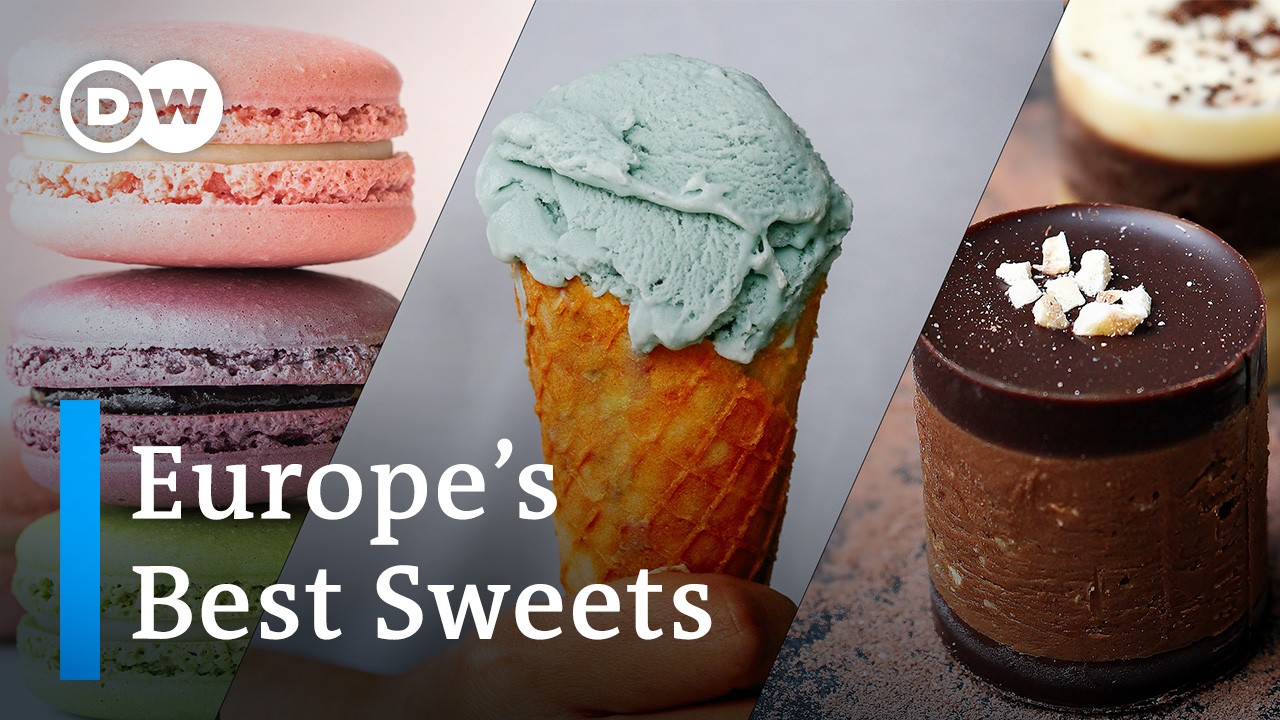
Whether for dessert, as a snack in between, or for getting together over coffee and cake – sweets have a firm place in most culinary culture. As they do in Europe. We picked 5 classic and popular sweet treats from France, Belgium, Austria, Italy and Germany to show you what makes them special and how they are prepared.
CREDITS
Report: Christian Weibezahn
Edit: Andreas Ogrzewalla
CHAPTERS
00:00 Intro
00:16 French Macarons
02:02 Austrian apple strudel
03:08 Belgian chocolates
04:12 Italian gelato
05:20 German Black Forest cake
#sweets #candies #dessert
————————————————————————————
Subscribe to DW Food:
https://bit.ly/DWFood_Sub
DW Food brings you the perfect blend of culinary trends, easy DIY recipes, exciting food secrets & a look behind the scenes of Europe’s culinary culture.
Do you have a bit of a sweet tooth? Then you’re in for a treat. We’re going to show you five sweet highlights from Europe that’ll make your tastebuds water! Our confectionary journey starts in France with the crème de la crème of patisserie creations: macarons.
To make the shells of chocolate macarons, almond meal, powdered sugar and cocoa are put into a mixer along with liquid egg whites. Seperately, sugar sirup is also mixed with egg whites. These beaten egg whites are then carefully folded in with the shell dough by hand. That way, it’s fluffier.
Once it’s dabbed onto the baking sheet, things get loud. The word macaron comes from the Italian term ammaccare, which means to squash. This premium confection is said to have been brought by Queen Catherine de’ Medici from Florence to France in the 16th century. The filling of chocolate macarons consists of cream,
Butter and three different varieties of chocolate. One squirt from the pastry bag, top up with a second shell, and, voila, the macaron is done. The classic flavors include vanilla, pistachio, raspberry and of course: chocolate. But weight watchers beware: A single macaron, measuring three centimeters across, contains up to 100 calories.
Next up is the Austrian capital of Vienna – and its tasty apple strudel. The dough is made of flour, salt, an egg, lukewarm water and oil. But how it’s made is what’s unusual: When the dough is thrown up in the air, it stretches out and gets thinner in the middle.
The origins of Strudel dough are thought to lie in the Orient, from where it reached Vienna in the 15th century. The apples also have to be cut thin, so as not to ruin the thin dough. Then, cinnamon, sugar, pieces
Of butter and a mix of rum and raisins go into the filling that gets rolled up into the dough. Best is to enjoy the finished apple strudel warm, sprinkeled with a bit of powdered sugar. Our next stop is Belgium, where a very sweet treat awaits us: different variations of delectable pralines.
The chocolate is made of cocoa liquor, some cocoa butter and sugar. Then come other ingredients, depending on the type of praline. To make marzipan pralines, cut-up pistachio marzipan is covered in chocolate, then decorated by hand using a fork. Belgian pralines come in countless varieties. Some are made with basil,
Fresh mint, thyme or spices such as cardamom, star anis or curcuma. The possibilities are endless. Now, we’re off to Southern Europe. Italy isn’t just famous for pizza and pasta, but for its exquisite ice cream: gelato…in its many combinations. It’s important to use fresh ingredients: Whether melons,
Peaches, pistachios, pine nuts from Tuscany or hazelnuts from Piedmont. Besides actual ice cream, sorbet is a common alternative – and contains no milk. To make ice cream, milk is mixed with the other ingredients and put into an ice cream machine.
In it, the mixture is stirred and cooled to minus 25 degrees Celsius until it attains the perfect consistency. Hungry for one more classic? This one’s from Germany: the Black Forest cake. You take a sponge cake base and soak it in high-proof kirschwasser brandy. Then
You spread some pitted morello cherries on top, and on a second layer of sponge cake, you add one and a half liters of whipped cream. Then comes the final layer and more cream to top it off. Finally, you decorate it with some morello cherries and chocolate flakes.
Some say the flakes are meant to depict the dark Black Forest, while the cherries represent the traditional bollenhut hats typical of the region. And how’s it taste? It is lovely! So, did anything whet your appetite? Let us know in the comments below.
17 Comments
😋
What about yazdi candy?
Getting your authentic German "Blackforest Cherry" cake popped looks like a good idea same for the Strudel.
Macaron is toooo sweet
Would like to try apple strudel, gelato and black Forest cake, yummy
Basil in desserts sounds very weird but I'm sure it must taste good. I enjoyed watching this
I'd love them all! Really hard to choose… maybe the gateaux
Kick out the macaron, pure snobbery and tastes like nothing.
You forgot swiss chocolate 😮😮
Actually, I am not a big fan of Macarons 🤷♀️
where is Polish – Ptasie Mleczko?! 😀
The best one was left out: pastel de Belém.
Macaron FTW
Yum yum yum! 🙂
All of these looo good except for the apple strudel. Not a fan sadly.
❤️❤️❤️❤️❤️❤️
I want em all