
Our books
“Early Italian Recipes. Cereals, Bread, Pasta, and Pies”
English https://www.amazon.com/dp/B0CMKBXSV1
Italiano https://www.amazon.it/dp/B0CMKM4H5D
“Early Italian Recipes. Vegetables, fruit, herbs, and flowers”
English https://www.amazon.com/dp/B0B4T8VPFQ
Italiano https://www.amazon.it/dp/B0B4V32FHR
“Ancient Roman Cooking”
English https://www.amazon.com/dp/B08LHG6RR5
Italiano https://www.amazon.it/dp/B08LHF72ZR
“Libro de la Cocina. Medieval Tuscan Recipes”
English https://www.amazon.com/dp/B0BMQQ6SFY
Italiano https://www.amazon.it/dp/B0BNG5J9MF
“Registrum Coquine. A Medieval Cookbook”
English https://www.amazon.com/dp/B0953XLBS3
Italiano https://www.amazon.it/dp/B0953YCJSJ
“De Observatione Ciborum. Early-medieval recipes at the court of the Franks”
English https://www.amazon.com/dp/B09K83NMXJ
Italiano https://www.amazon.it/dp/B09K821LYC
Check out our Patreon page
https://www.patreon.com/historicalitaliancooking
or just buy us a beer
https://www.buymeacoffee.com/historyandfood
Check out our merchandise
https://teespring.com/stores/historical-italian-cooking
Today we prepare medieval pizza with pork jowl and fennel from Platina’s De honesta voluptate et valetudine, written in the 15th century.
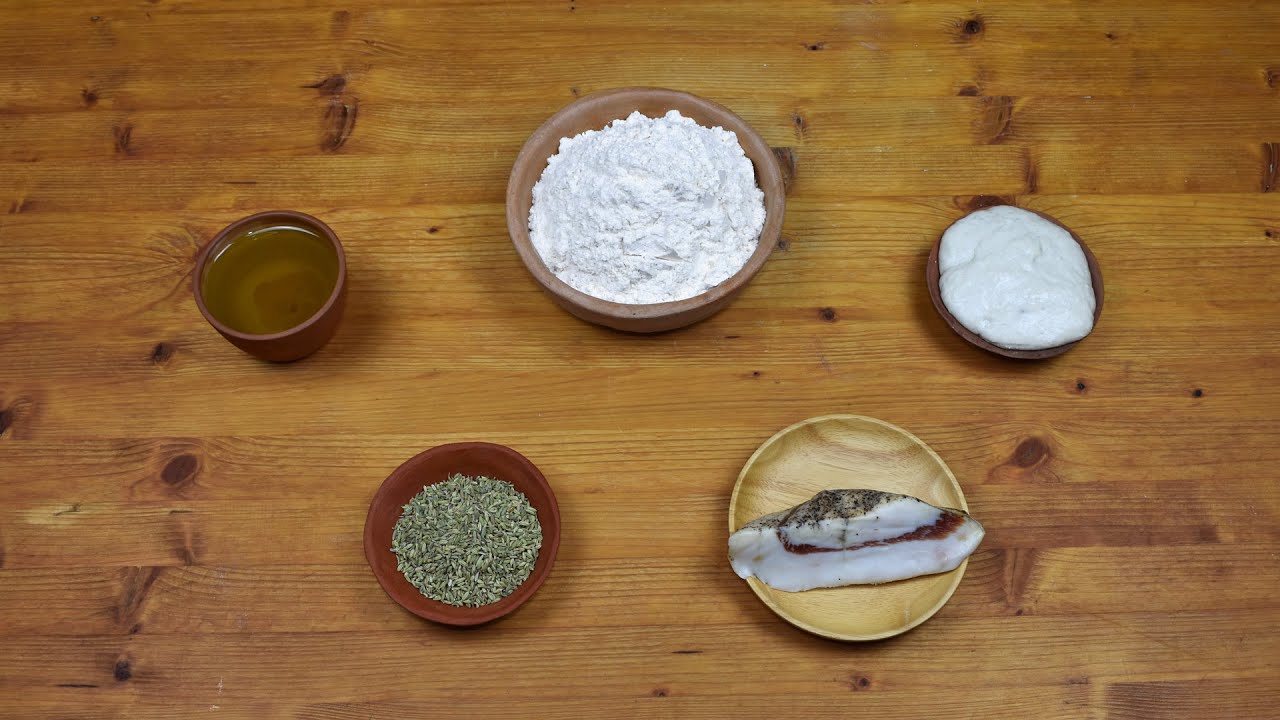
Ingredients:
flour
sourdough
cured pork jowl
olive oil
fennel seeds
salt
Bread leaven with must https://youtu.be/THvI6tE1lBY
Radish soup https://youtu.be/9ikkQod76RE
Hop shoots https://youtu.be/8kHtVsomhpo
Purslane salad https://youtu.be/DW-_K0BXbGo
Medieval pizza with quails and cheese https://youtu.be/4hFVvDOlznE
For more info about this recipe check out our blog: https://historicalitaliancooking.home.blog/english/recipes/medieval-pizza-with-pork-jowl-and-fennel
If you liked the music on this video check our music and art channel: https://www.youtube.com/user/LiliumAeris
__
Music by Lilium Aeris
Andrea Tuffanelli – lute
Serena Fiandro – gemshorn
Qant amors trobet partit – Peirol (ca. 1160 – 1220s)
#medievalfood #medievalrecipe #middleages #ancienthistory
Welcome to our kitchen. Today we prepare medieval pizza with pork jowl and fennel from Platina’s De honesta voluptate et valetudine, written in the 15th century. We start with the ingredients. We need flour, sourdough, cured pork jowl, olive oil, and fennel seeds.
We knead the flour with two pinches of salt, sourdough, olive oil, and warm water. The dish we are preparing today is called piza or fugacia in the vernacular edition of Platina’s book and placenta in the Latin edition.
These terms are interchangeable, as confirmed in the 17th century by Vincenzo Tanara in L’economia del cittadino in villa. Tomatoes are clearly absent in the medieval recipes, but they don’t seem to be very common even in the late 19th century pizze.
For the Neapolitan cook Adolfo Giaquinto, pizza napoletana is similar to Platina and Tanara’s pizze and is made with salt and oil, with or without anchovies, kneaded into the dough or placed on the pizza.
Pellegrino Artusi, instead, pizza is a sweet, following a very old tradition that has its roots in the Renaissance and there is no mention of savory versions. We mince the pork jowl and add it to the dough with the fennel seeds.
The term pizza is attested from the 10th century thanks to a collection of notarial acts of the city of Gaeta, although there are no descriptions of what this early pizza should be. In the historical sources, starting from the 15th-century recipe we are preparing today, pizza refers to very different types of preparation,
From focacce to sweets, savory dishes, and layered cakes with little in common, as we can read in Bartolomeo Scappi’s Opera and Panunto’s La singolare dottrina, both written in the 16th century.
In the earliest recipes for pizza, we find all kinds of ingredients: cured pork fatback is one of the most common, but we also find almonds, walnuts, meat, fruit, and herbs. In the past, we prepared another medieval pizza with quails and cheese from Platina’s book. You find the link in the description below.
If you prefer, you can use olive oil without pork jowl, which replaced the pork fatback recommended in the original recipe, or you can use butter instead, as suggested by Platina.
Whereas Tanara writes to melt the cured pork fatback and remove the solid bits, Platina specifies to slice it and knead it directly into the dough. Fennel seeds are very popular in the preparation of medieval and Renaissance bread, as are anise seeds. Use the ones you prefer.
This preparation can also be unleavened: according to Platina, there are versions with or without yeast. We used sourdough, but another possibility is to use fresh grape must, a common leavening agent from the Antiquity to the end of the Renaissance,
As we read, for example, in Cato’s De Agri Cultura, Geoponics, and Vincenzo Tanara’s L’economia del cittadino in villa. You find an example of bread leavened with must in the description below.
We let the dough rise overnight, then we flatten it with our hands, let it rest for half an hour, and cook it in the oven for about 30 minutes. To learn more about pasta throughout history, read our new book “Early Italian Recipes. Cereals, bread, pasta, and pies”,
Which includes 114 recipes from the Antiquity to the end of the Renaissance, an introduction to the history of cereals in Italy, and an explanation of the basic preparations and the ingredients used in the recipes.
This book is the second in the series Early Italian Recipes, the first being dedicated to vegetables, fruit, herbs, and flowers in historical cooking. To know more about medieval cooking, check out our books Libro de la Cocina. Medieval Tuscan recipes and Registrum Coquine. A medieval cookbook.
To support our work, you can also buy us a beer and purchase our merchandise. All the links are in the description below, along with a list of our books on historical cooking and the link to our Patreon page, where you can find translations of primary sources and articles on historical food.
This pizza was delicious, fragrant with cured pork jowl and fennel that blended perfectly to create an excellent combination of flavors.
A great medieval dish, perfect to be eaten alone as a snack or to accompany a salad or a soup, such as hop shoots, purslane salad, or radish soup. You find the links to the videos in the description below.
If you’re interested in ancient foods and flavors, subscribe our channel and consider supporting us on Patreon.
6 Comments
Such a simple recipe. Our ancestors sure knew how to eat well.
ancient Roman sweets from the book of Apicius, new recipes😍
Good morning. Do you may be using Amazon KDP?.
Just curious what kind of flour you used? Is there a specific kind of flour associated with this time period for baked foods?
Yummm yummmm
Fascinating!