
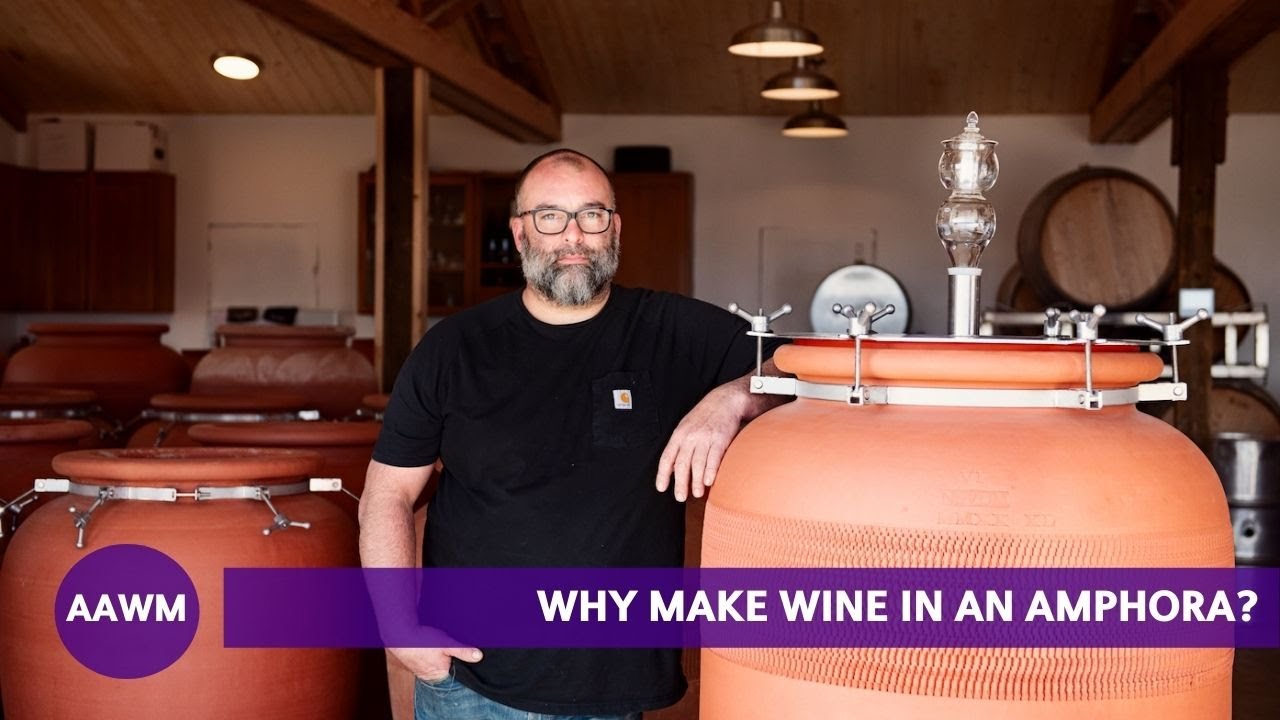
In this informative video, Master of Wine Bree Stock discusses the fascinating history and benefits of using amphorae, the most ancient fermentation vessels, in winemaking. Bree shares her insights and expertise on the unique convection method and fermentation process that the clay vessel provides, resulting in a more approachable wine earlier in its life, preserving the wine’s natural grape aromatics and avoiding overcooked or overdeveloped flavors. Additionally, Bree explains how she and her team at the winery work with their close friends, the Beckham family, who are the only producers of amphorae in the United States, to explore the marriage between different grape varieties and this incredible vessel. Don’t miss this engaging and informative discussion on the sustainable and innovative approach to winemaking with Master of Wine Bree Stock.
See all of our videos with Chad and Bree Stock here:
Subscribe to Ask a Winemaker for hundreds more wine videos: http://www.youtube.com/subscription_center?add_user=askawinemaker
Have a question for a winemaker? Post it in the comments and we will try to answer it for you.
Join us on Instagram: https://www.instagram.com/ask_a_winemaker/
Ask your question on Twitter: www.twitter.com/askawinemaker @askawinemaker.
www.askawinemaker.com
We work with amphorae produced by the Beckham family in Oregon who are our close friends. Andrew Beckham, a professional ceramicist and winemaker, is building locally made amphorae, making this an extra special treat for us. He is the only producer of amphorae in the United States, which allows us to use them with local fruit to produce wines in the Willamette Valley. Amphorae are clay vessels of varying heights and the most ancient fermentation vessel, dating back to 8000 BC, probably even older. They are a very sustainable fermentation vessel that can be reused many times.
The shape of amphorae tends to be egg-shaped with a narrower bottom, creating a unique fermentation process that gives a different feeling to the wine. The wine in amphorae has a different convection method than traditional fermentation vessels, resulting in almost a polymerization of tannins and a more approachable wine earlier in its life. The fermentation tends to be fairly cool as amphorae are thin-walled, preventing the wine from overheating and preserving its natural grape aromatics without getting overcooked or overdeveloped flavors. Amphorae are part of a fermentation vessel spice mix, and we make a single amphora wine every year. Each year, the available grapes determine the wine’s variety. We’ve made a pinot gris pinot noir fermentation in amphora, a pinot noir gamay noir trousseau noir co-fermentation in amphora, and in 2021, a saint laurent blaufrankisch gruner veltliner co-fermentation in amphora. We continue to explore the marriage between different grape varieties and this incredible vessel, which we get to work with thanks to our friends.
6 Comments
That was a lovely video – ty
Great video guys.
I find using an amphora for wine fermentation is very interesting. I know that in the country of Georgia amphora have been used to make wine for centuries but here in the U.S. it is a novelty.
I was wondering if you lose a lot of the alcohol through the porosity of the amphora, since it is a kind of clay pot. Please correct me if I am wrong,
Thank you.
Such a strange American-Australian hybrid accent
Hello! I am learning mead making as a hobby, and i am having issues of making my home-made jars airtight. I tried making some kimchi pots and that kind of worked, but im not quite satisfied with the results. If I may ask what are those metal tops on your amphora called? Are they custom made or can they be purchased somewhere?
first i tought i saw bert kreisher and tom segura making that big amphorage i was wtf they changed their trade?
Are the Amphora vitrified when fired?