
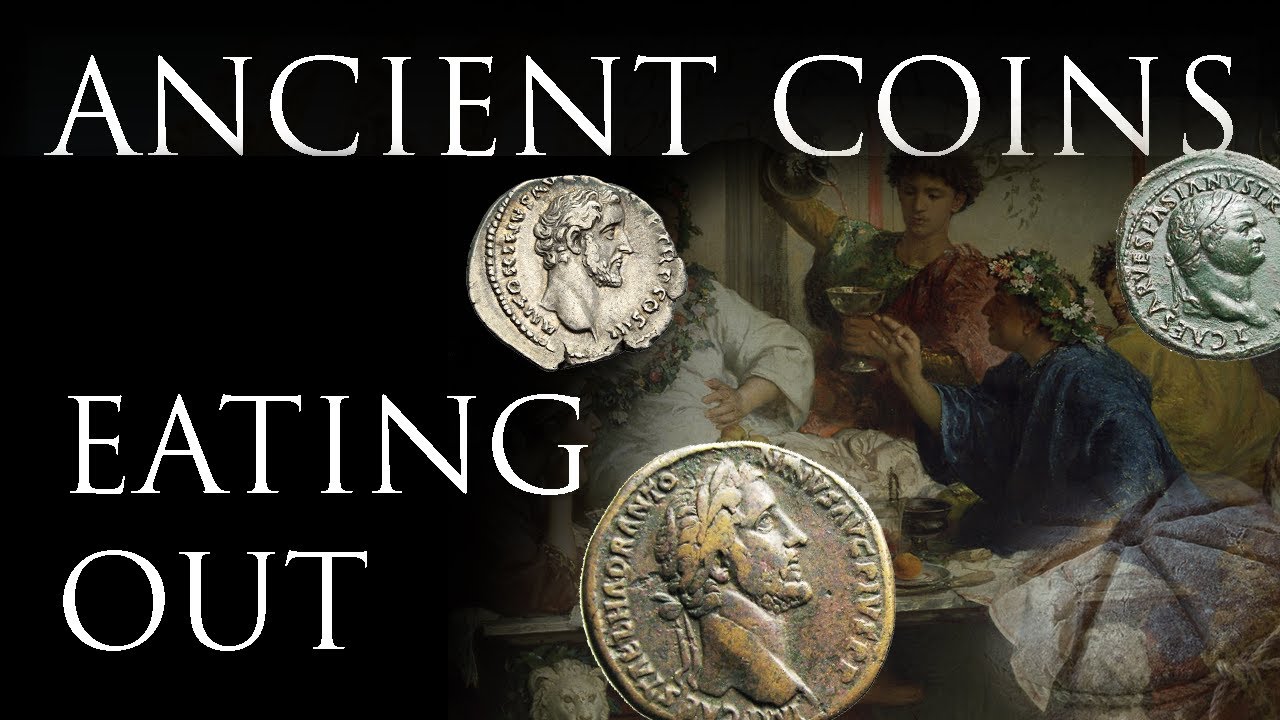
Today, lets SPEND some money. Lets go to the local roman tavern, and based on references from ancient sources, see how many of our coins would it take to go out and grab something to drink or eat.
Like the drawings on my videos? Get them on a T-SHIRT and MUGS: https://leob.creator-spring.com/
—— Recommended Literature (affiliate links) ——
100 Greatest Ancient Coins – https://amzn.to/3hKz1o4
The Handbook of Ancient Greek and Roman Coins – https://amzn.to/3iTB1vv
Greek Coins and Their Values – https://amzn.to/3mKng4S
—— Recommended STORAGE and DISPLAY solutions for your coins (Affiliate links) ——
Transparent diamond COIN DISPLAYS – https://amzn.to/39Tmmyu
Leuchturm Coin case L6 – https://amzn.to/3ttvMbL
Leuchturm Coin Box 35 – https://amzn.to/39TBkV0
Leuchturm Coin Capsules – https://amzn.to/3oW1o6q
Leuchturm Coin case S6 – https://amzn.to/3aAZTFu
—— music credits ——
Music: Entertainment by Alexander Nakarada (www.serpentsoundstudios.com)
Licensed under Creative Commons BY Attribution 4.0 License
https://creativecommons.org/licenses/by/4.0/
21 Comments
Excellent video ! Very informative and well presented. Sharp examples of ancient Roman coins used in your value comparisons. Thank you !
Amazing what only one denarius could buy let alone an aureus!
Great video. It was very interesting
Fantastic video! This was a really fun way to give context to coin values! 🙂
Really nice video !!!! I enjoyed it!!!! Best regards from italy 🇮🇹 I collect also👌🏻
Very interesting and enjoyable video. Keep up the good work 👍🏻👍🏻👍🏻.
Great bronze additions! 👏I really loved the idea of this video.
Cool video.
Was always curious about prices back in ancient times. Very cool video thank you!
A great video for teachers!
1:20 There are actual shopping lists found in Pompey. Look them up, they are a supplementary read on the prices in my opinion. Also, the Falernian for 4 As was probably not real Falernian but the best wine the establishment had at the time. Afaik Falernian was a lot more expensive than that, especially the aged variations.
Edit, here is the shopping list found in Pompey:
Seven days before the ides:
cheese, 1 as; bread, 8 asses; oil, 3 asses; wine, 3 asses.
Six days before the ides:
bread, 8 asses; oil, 5 asses, onion, 5 asses; for the pignatta, 1 as, bread for the slave, 2 asses, wine, 2 asses.
Five days before the ides:
bread, 8 asses, bread for the slave, 4 asses; spelt, 3 asses.
Four days before the ides:
wine for the tamer, 1 denarius (=16 asses); bread, 8 asses, wine, 2 asses; cheese, 2 asses.
Three days before the ides:
dried fruit, 1 denarius; bread, two asses; steak, eight asses; wheat, 2 asses; beef , 1 as, dates, 1 as; incense, 1 as, cheese, 2 asses; sausage; 1 as, caciotta cheese, 4 asses, oil, 7 asses; at the storehouse, …; clover, 1 denarius and 1 as; oil, 1 denarius and 9 asses; bread, 4 asses; cheese, 4 asses; leek, 1 as, for a plate, 1 as; at Sittia, 9 asses; thyme ointment, 1 as.
Two days before the ides:
bread, 2 asses; bread for the slave, 2 asses,
The day before the ides:
bread for the slave, 2 asses; black bread, two asses, leek, 1 as.
On the ides:
bread, two asses, black bread, 2 asses, oil, 5 asses, spelt, 3 asses, fish for the tamer, 2 asses.
V Great video thank 👍👍👍👍👍
An informative and fun video! These thought projects are always so much fun to do, what a good friend we have buying food for everyone lol
My fascination with numismatics has always been the idea of coins as circulating money. Who was the first to receive a shiny, new coin? What did he spend it on? How many transactions did it pass through, and who was the last to spend it, before it came to me? What a great video, addressing some of that notion! =^[.]^=
This was an important fun exercise, thanks Leo !
Another source I have come upon was to use the price of bread as the base
Very cool. Good job. Thank you very much
Fascinating topic 🪙
The 12-years-old in me can't help but love the name of that currency! 'As'! Hehehe!
This was a fun and informative video! 👍👍❤❤
What fun more of these videos
An excellent exercise in not looking at the ancient world in terms of the modern world.