
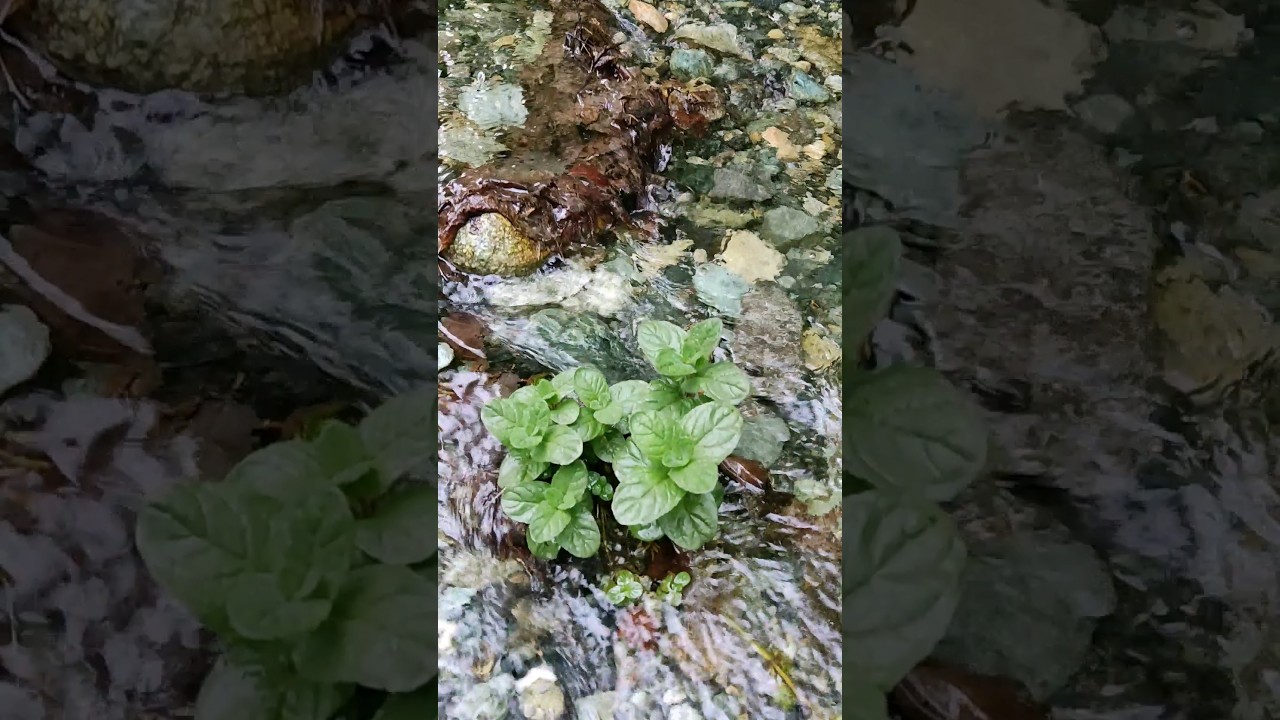
Watermint is described by Costanzo Felici (16th century) as a type of lesser calamint. Illustrations of this plant are found in Pietro Andrea Mattioli’s Discorsi sulla Materia Medica di Dioscoride, written in the same period.
Il calamento o nepeta o mentuccia o mentarella ancora lei vene volentieri e frequente in questa schiera, così in insalata fresca tenera con le sue cime, como ancora e fresca e secca in molte altre vivande e similmente in legumi, pesci e lumache. Del calamento se ne trova de tre sorte: il primo, cioé il montano, è poco in uso nei cibi, pur saria molto gustevole; il secondo usitato frequentemente; il terzo quello che nasce appresso l’acque et è poco in uso per questo, pure alcuna volta le sue zecche tenere vogliono intrare ne l’insalata.
“Calamento, [also called] nepeta, mentuccia or mentarella is among these [herbs], and its tops are often and gladly added to fresh, tender salads, as well as it is used fresh and dried in many dishes and similarly, added to legumes, fish, and snails. There are three varieties of calamento: the first, the mountain type, is seldom added to food, although it has a pleasant taste; the second is very common; the third grows near the water and therefore less used, although its tender, fresh leaves are sometimes added to salads.”
For more information about vegetables in historical Italian cooking check out our book Early Italian Recipes. Vegetables, fruit, herbs, and flowers.
English https://www.amazon.com/dp/B0B4T8VPFQ
Italiano https://www.amazon.it/dp/B0B4V32FHR
#watermint #foraging
3 Comments
Watermint is described by Costanzo Felici (16th century) as a type of lesser calamint. Illustrations of this plant are found in Pietro Andrea Mattioli’s Discorsi sulla Materia Medica di Dioscoride, written in the same period.
Il calamento o nepeta o mentuccia o mentarella ancora lei vene volentieri e frequente in questa schiera, così in insalata fresca tenera con le sue cime, como ancora e fresca e secca in molte altre vivande e similmente in legumi, pesci e lumache. Del calamento se ne trova de tre sorte: il primo, cioé il montano, è poco in uso nei cibi, pur saria molto gustevole; il secondo usitato frequentemente; il terzo quello che nasce appresso l’acque et è poco in uso per questo, pure alcuna volta le sue zecche tenere vogliono intrare ne l’insalata.
"Calamento, [also called] nepeta, mentuccia or mentarella is among these [herbs], and its tops are often and gladly added to fresh, tender salads, as well as it is used fresh and dried in many dishes and similarly, added to legumes, fish, and snails. There are three varieties of calamento: the first, the mountain type, is seldom added to food, although it has a pleasant taste; the second is very common; the third grows near the water and therefore less used, although its tender, fresh leaves are sometimes added to salads."
For more information about vegetables in historical Italian cooking check out our book Early Italian Recipes. Vegetables, fruit, herbs, and flowers.
English https://www.amazon.com/dp/B0B4T8VPFQ
Italiano https://www.amazon.it/dp/B0B4V32FHR
Very nice
They sure look like happy little plants