
Go to http://www.bonnerwine.club/JulienMiquel & Get a $50 discount to America’s Most Unique Wine Club, join Bonner Private Wines.
Check out my review videos of previous Bonner Wine Club Selections: https://www.youtube.com/channel/UCSHHB3SBhaygeRxzTBV5kMA
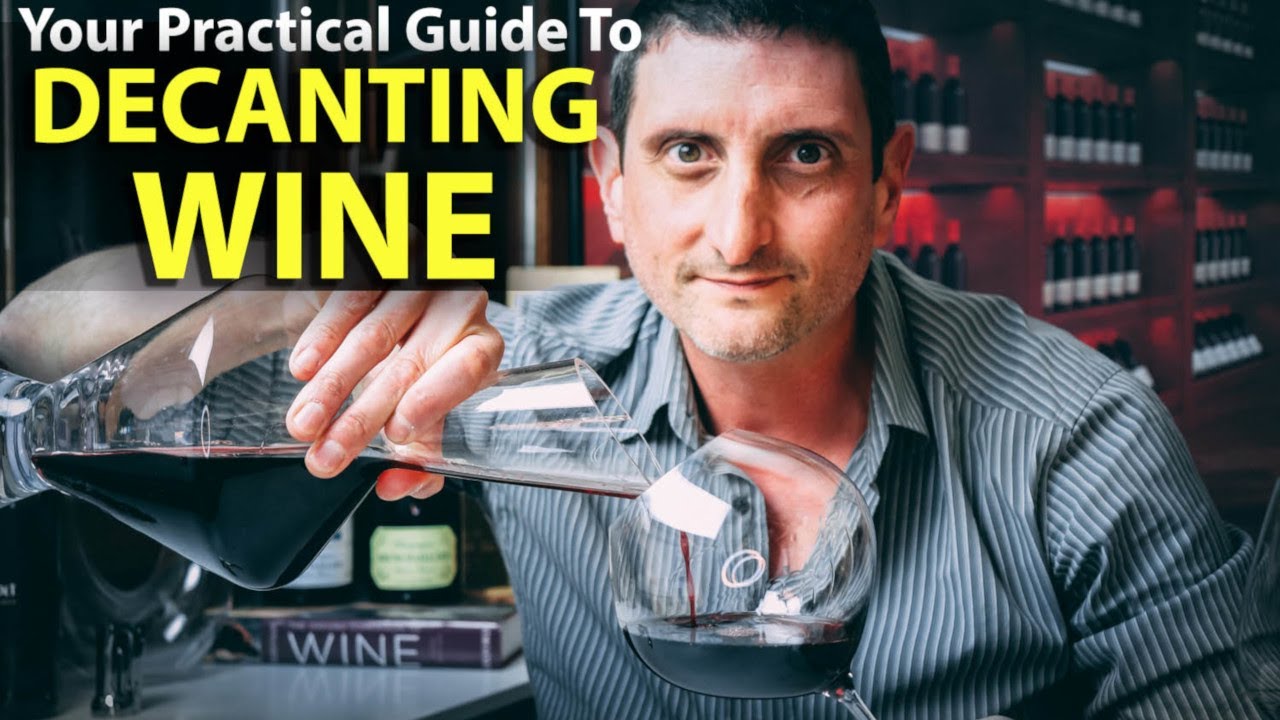
With this Episode of the Julien’s Wine School, we’re learning which wine you should consider decanting, how and why.
Watch more from Julien’s Wine School: https://www.youtube.com/watch?v=zIwsqlrJzd8&list=PLd_ydU7Boqa1UnY8sHvy2UD6LFgnpXQ7a
00:00 – Teaser Intro
00:51 – About the Bonner Private Wine Club
02:32 – Intro to Decanting
04:02 – Why Decanting Wine?
07:00 – Which Wines to Decant?
09:00 – When to Decant Wine? How Long!?
10:38 – How to Decant?
Video Content:
Decanting wine is one of those gestures that you see wine professionals and connoisseurs do, but that is a little intimidating for everyone else. It can be a little daunting first: to know which wine to decant or not, and then how to do it, right?
While, at the end of the day, decanting wine is not very complicated, and knowing what to decant and when can be summarized in a few simple rules.
The reality is that even the average wine consumer could greatly improve its wine tasting experiences by decanting wines more often.
So here are a few rules of thumb to help you understand what decanting does to make wine better, and how to execute the gesture.
Chapter 1 – Why Decanting wine?
Essentially, decanting wine has two functions, on that is more important and more common than the other.
The main purpose of decanting wine is to introduce oxygen into the wine, or in other words, to aerate it.
Wine is full of anti-oxidant molecules, components that love to absorb oxygen. That’s especially true for red wines that have much more tannins into them. Tannins are strong antioxydants.
Because of these antioxydants, and because a bottle of wine is sealed (otherwise it would turn into vinegar), the aromatics in the wine hardly ever see any oxygen. When aromas haven’t had access to oxygen for a long time, they turn a little muted, less expressive, and sometimes they can even develop some slightly unpleasant smells like a smell of rubber or tire. That’s called reduction, which is the opposite of oxidation.
Introducing oxygen into a wine allows the aromas to breathe and take back their natural chemical form and their more natural expression of fruit, of spices, herbs, etc.
This is the primary function of decanting. As we decant, because we pour the wine out of its bottle, oxygen dissolves into it and liberates the full aromatic potential of the wine.
The second function of decanting, is to eliminate the sediments or the deposits that may have precipitated at the bottom of the bottle, so they don’t get served into our glasses.
Wine is not a perfectly stable solution, at least the good ones. So over time, especially during a long ageing, some of the acids and the tannins in the wine start precipitating, forming crystals than are too heavy to stay in suspension in the wine. This is a perfectly natural phenomenon, a sign that your wine is ‘alive’.
Chapter 2 – Which wines to decant?
Decanting is mostly for red wines really, because they contain these tannins that love to absorb oxygen.
Young, light and fruity reds generally do not need or benefit much from decanting because they don’t have a lot of tannins, and are already very expressive without much oxygen. So light and fruity Pinot Noirs or Beaujolais for examples do not generally need decanting.
Older wines though, will pretty much always benefit from decanting. Say, wines older than 5 years old, because the wine has been trapped into the bottle for all these years without oxygen. It’s generally better to let it breathe a little before serving.
Then young concentrated reds, the rich Cabernet Sauvignons, the Merlots or Malbecs, because they are so rich and full of tannins, can benefit from some aeration to amplify and reveal their fruity and spicy characters better.
Most old white wines like old Chardonnays for example could be decanted which would help tame down some of the nutty and waxy characters that they have and reveal the fruity characters better.
Some even go as far as decanting old aged Champagne wines!
Chapter 3 – When to decant?
Every wine is different, every bottle even is different and the right amount of oxygen and the time it’ll take it to reveal the full aromatic potential of a wine can vary greatly depending on each wine, its age, its type etc.
Most types of wines that we talked about earlier, the old wines and the young rich reds will benefit from being decanted half an hour or so before serving.
But half an hour will allow the oxygen to start interacting with the wine, without oxidizing anything.
Shout out to Madeline Puckette of Wine Folly (Essential Guide to Wine Book author), and Gary Vaynerchuk of Wine Library TV (wineliberarytv) for having inspired me to start making wine education and tasting videos on YouTube.
#JulienWineSchool
25 Comments
Thanks for taking my mind off of corona virus
Julien, what do you think about California wines? That's all I can afford right now. What do you suggest?
God Bless You Julien, stay safe
Nice straight-forward explanation of decanting
where have you been my friend?????
Bonsoir Julien! I bought a OWC of 6 Chateau Canon 2017 and Leoville-Barton 2017! First Question when does it make sense to taste one, because i am really curious. Secondly i wanted to know why should someone wait this kind of Carbernet to drink, is it about the tanins and they are so strong. How would be the taste different, because when i read scorings Robert Parker etc..their is always written how perfect the wine already is but as well someone writes, you should forgett it 5 years in the cellar, it makes me a bit confus. I also wanted to buy Montrose, what is the big difference from a Montrose to a Figeac, Barton or Canon…someone from Millisime told me, Montrose really could take 20 to 50 Years until he would open, and that as well in early years there is a time where it is shortly open. Can you help me with some advice please!?
Very nice. I enjoyed the video. Thank you for taking me along. I fully watched and enjoyed it. 👍.
Warm greetings!
I often ask for wine to be decanted at restaurants. If it's a half decent wine it gives it some chance of opening up during the meal. People pay top dollar for a complex wine and start drinking it straight away before it's had a chance to to shine. Letting it breathe when the wine is above the neck line is not going to help. It really needs to oxidise and the very act of pouring out the entire bottle into the decanter helps tremendously. I think many people don't think to ask or are too embarrassed but most decent places will respect you the more for doing so. Good review. WT
Fantastic!… Been thinking about decanting lately and you answered all my questions 😊🙏… Be well Sir!
In my opinion ALL wine can be decanted. Degrees to how long you decant depends on the grape variety and age; for instance Barolo often requires sometimes a minimum of 6 hours of slow oxidation in a decanter. You can speed that process up with an aerator, but I would avoid that if the wine is 10+ years or older as that may bruise or force too much oxygen loosing much of the delicate flavours. A fine metal sieve can be placed over the top of the decanter to catch the sediment. Thank you for sharing your methods and techniques.
Great video Julien. Really interesting and informative. Superbly presented. Thank you from Alex @winesave
Is your channel for wine or pronunciations?
Bonner's logo is a woman laying ready on a bed.
Great video.
Im sharing this
This was fascinating to learn, thank you! May I ask, what is the piece of music that plays in your opening credits?
Brilliant Julien…merci!
Bravo and Thank You Julien, very informative and important.
15 minutes? Skip
Video starts at 2:53
I hate the thought of wine being asphyxiated in a bottle, so I try to liberate as many as possible 😀😎
Really informative and inspiring video! Thank you for him.
The wine left in the bottle with the sediment I use for sauces and gravy… Particularly with Beef and Venison.
Not sure if I fully understood the concept of the dedicated "decanter". I just take my (used) bottle of wine out of the refrigerator about 2 hours before consuming, then pour it into my (big) wine glass an hour before, and let it "decant" there. (meaning more- aerating it there). That's mainly because I do not drink the entire bottle but a glass everyday (sorry, by myself). About sediments- I don't think I encountered many, maybe because my (Cabernet) wines are not very old, but in any case, if it's a good wine, when I get to the end (after 4 days or so)– hey, I pour it all and consume it all! Yup! à santé!
I would recommend pouring your wine through a Vinturi with a screen into the decanter to filter out sediment and any other debris. The primary pour through the Vinturi will also help aerate the wine!