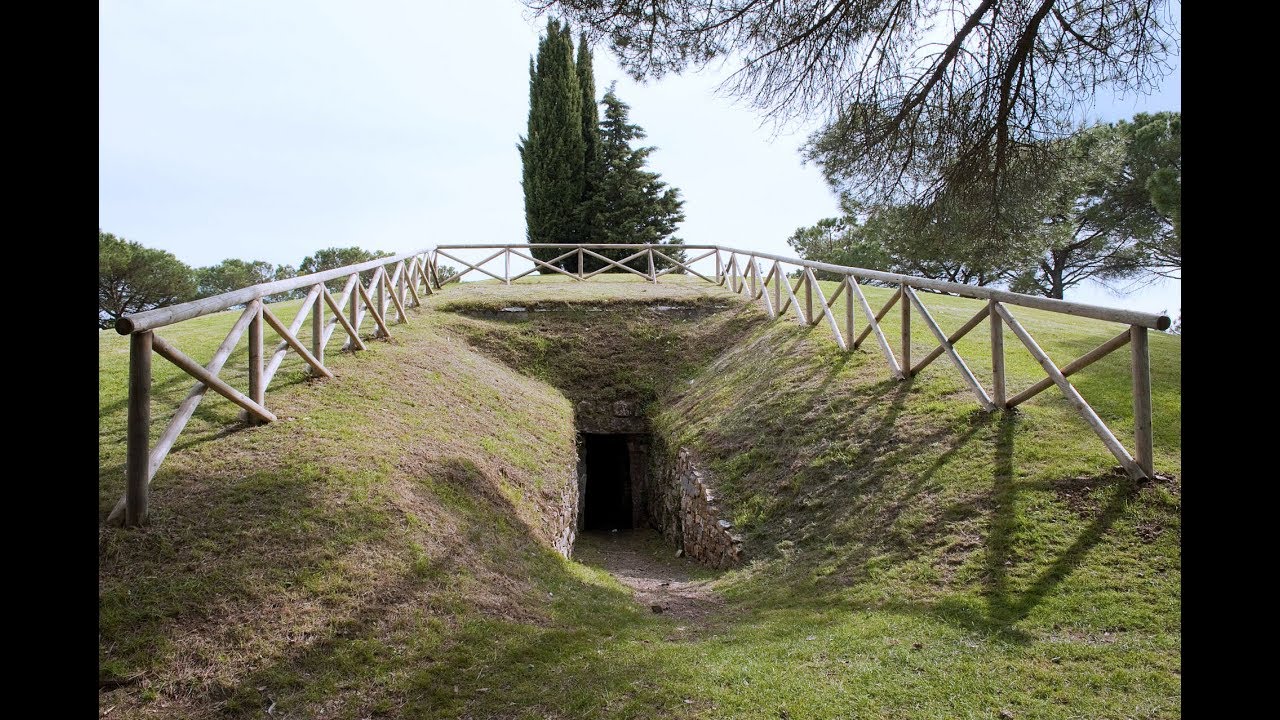
The Montecalvario mound is an Etruscan tomb located in Castellina in Chianti, Italy. Its name derives from the medieval age, since here was a chapel for the last station of the Via Crucis. The tomb was certainly owned by an aristocratic family whose wealth was to be linked to the fortunate geographical position of the place, which was placed on the main roads of the time. The tomb is large, with a diameter of over fifty meters, and consists of four burial chambers arranged according to the cardinal points: the arrangement according to the cardinal points, as well as the sections of the underground chambers and the shape of the tumulus, have made suppose that the tumulus was a source of inspiration for the mausoleum of Leonardo da Vinci. However, the Etruscan mound was never completed: the original project included four rooms with vaulted ceilings, preceded by a vestibule with two side cells. The east tomb has no smaller cells, while the north tomb has no main chamber. At the time of the discovery the tomb had already been sacked, so that very few objects were found inside it: some fragments of the grave goods were recognized as objects in bronze, ivory, and glass paste, and date the tomb to the archaic age . The main finding, coming from the south tomb, is a lion protome depicted with the jaws wide open, made of stone, and forces part of the architectural decoration. The type of objects does not differ from those found in the tombs of Quintus, Camucia, Sodo and Murlo’s residence.