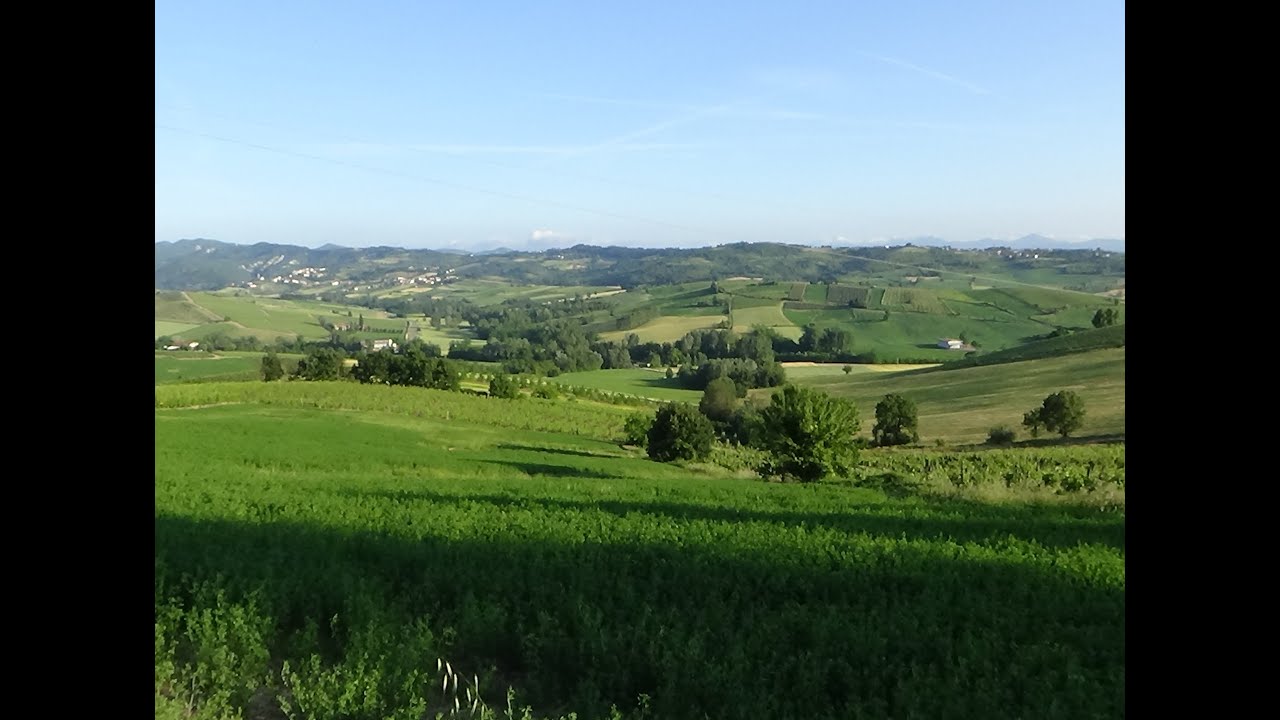
Montferrat is part of the region of Piedmont in Northern Italy. It comprises roughly (and its extent has varied over time) the modern provinces of Alessandria and Asti. Montferrat is one of the most important wine districts of Italy. It also has a strong literary tradition, including the 18th century Asti-born poet and dramatist Vittorio Alfieri and the Alessandrian Umberto Eco. The territory is cut in two by the river Tanaro. The northern part (the Basso Monferrato), which lies between that river and the Po, is an area of rolling hills and plains. The southern part (the Alto Monferrato) rises from the banks of the Tanaro into the mountains of the Apennines and the water divide between Piedmont and Liguria. The traditional cuisine of Montferrat, in addition to the award-winning wines, includes a wide variety of foods ranging from meat, fish, vegetables, and cheeses. Typical Monferrato dishes, which have now achieved a reputation not only nationally but also internationally include, among the first courses, agnolotti “al plin” (literally “pinched”), “Tajarin” (noodles for rich eggs seasoned with various sauces), risotto of Casale, rice with mushrooms and red wine, vegetable soups, polenta with fried cod or “loan”. Worthy of mention and especially well known is Bagna càuda. Among the meats: tripe, paws (batciuà), chickpeas with head, oxtail (now cooked with Barbera) and the cooked sausage. Monferrato is one of the most famous Italian wine regions in the world, especially regarding red wines and sparkling wines. The climate is dry continental with hot summers prone to drought and cold winters and the particular hydrogeological soil are favorable for viticulture, which, however, is dominant throughout, making the wine not only an element of economic wealth for the entire region but also a true symbol of the culture and tradition “Monferrina”. The widespread dissemination of indigenous grapes and consequently a wide variety of wines, witness them. Among the wines (DOC and DOCG), the most famous are Barbera d’Asti, Asti spumante, Moscato d’Asti, Cortese, Malvasia, and Grignolino. The Monferrato, together with Alba, is also known for the production of truffles; there are many fairs in this regard, one of all the regional fair of truffles held in Montechiaro d’Asti. 20 million years ago the Alps were formed, in the Mediterranean area was produced a new rising heat from the Earth’s mantle which resulted in the buckle and rupture of the European crust from which detached the Sardinian-Course block, the micro Sardinian plate did pin on the Ligurian Gulf executing a counterclockwise rotation of 50° and forming the Ligurian Sea. The sea covered the hill of Turin, the Langhe, Montferrat and the Po Valley. The rotation of the Corsica-Sardinia block opposed by the African block produced a pressure that gave rise to the Apennines. 8 million years ago to the east of the Corsica-Sardinia block opened wide north-south divide that separated the Italian peninsula from Corsica and Sardinia, this gap widened to become the Tyrrhenian Sea. In the period from 7 to 5 million years ago the Mediterranean Sea was closed and remained isolated from the Atlantic Ocean. This resulted in the increase of the temperature of the water that turned the Mediterranean into a low-salt lake with many areas dried up, this condition lasted for several hundreds of thousands of years was deposited sediment type saline evaporites. Subsequently, the Mediterranean Sea was opened, and the ocean water began to circulate between the Alps and the Apennines had formed a triangular gulf that covered the entire Po Valley. Due to the continuous lifting of the Alps and the Apennines to the sea withdrew from this gulf and the accumulation of sediments carried by the rivers gave rise to a flood plain which corresponds to the Po Valley. The marine deposits of this period are visible in the area of Asti. Among the artists active in the Monferrato, noteworthy are Gian Martino Spanzotti of Casale and painter of the Renaissance, Andrea Pozzo, Jesuit painter and architect active in the 17th century, the painter Pier Francesco Guala; Macrino d’Alba, a contemporary of Spanzotti, whose works are in private and public collections in the United States and Turin. His most important works can, however, identify a triptych housed in the castle of Camino, a “Madonna Enthroned” kept in the Sanctuary of Sacro Monte di Crea, another in “Madonna” in the church of St. John the Baptist to Alba and a “Marriage of St. Catherine” which adorns the church of Neviglie in the Langhe. The third artist monferrino chronologically speaking, but certainly not less important is the earlier of Guglielmo Caccia, nicknamed “The Moncalvo.” Recall among his works a “Redeemer” statue from Museum of Asti and “Resurrection” in the cathedral, also several paintings can be found in the parish of Grazzano Badoglio, Villadeati, Casale Monferrato, San Salvatore Monferrato, Moncalvo and Castagnito.