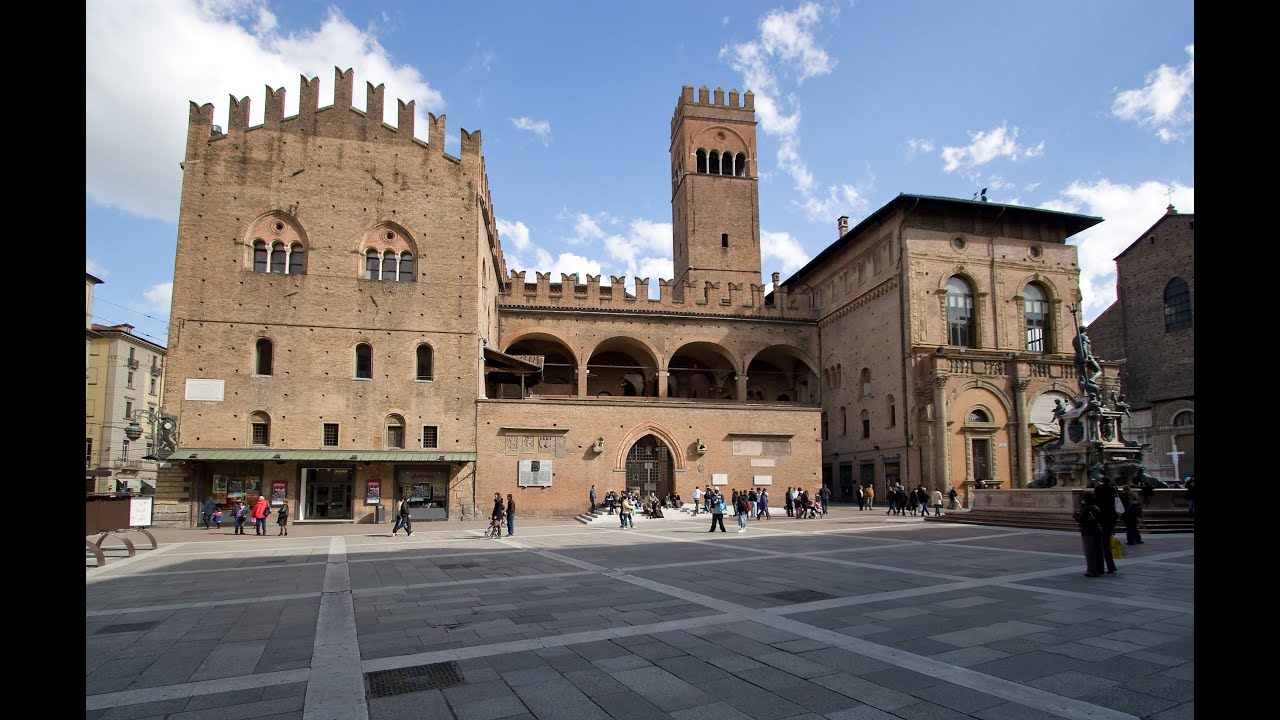
The Palazzo Re Enzo is a historic building in Bologna, the thirteenth century. It was built in 1245 as an extension of the municipal buildings of the Palazzo del Podesta and therefore called Palatium Novum but its historical events have always been linked to King Enzo of Sardinia. Three years after its construction became the residence forced King Enzo, son of Emperor Frederick II of Swabia, captured during the battle of Fossalta near Modena. Re Enzo was held for several days in the castle of Anzola Emilia, where you can still visit what was once his prison, and later moved to Bologna. Enzo remained there until his death in 1272, probably in environments suitably used for the second floor. On the ground floor were kept the Northern League and the war machines. On the first floor there were the offices of the magistrate and the chapel; later Antonio di Vincenzo in 1386 realized masonry Hall of the fourteenth century that was converted into a municipal archive. The top floor was heavily restored in 1771 by Giovanni Giacomo Dotti. On the right of the building is the entrance of the chapel of St. Mary of Prisoners which went the condemned. In 1905 Alfonso Rubbiani restored the Gothic appearance of the building, operating, however numerous additions fancy dictated by fashion neo-medievalist era. The exterior facades of the Palazzo Re Enzo facing the Piazza Nettuno, Via Rizzoli and Piazza Re Enzo and underwent restoration in 2003. There are numerous legends disclosed by reporters about the arrest and imprisonment of King Enzo. There is talk of a failure to escape from the castle of Anzola Emilia even before the king was brought in Bologna and later a ransom that the father would pay to the Bolognese, with whom he could have been erected throughout the walls of the city but that the Bologna refused. It seems that during his imprisonment king Enzo passed the day along with other prisoners but during the night was isolated in a cage hanging from the ceiling and watched over. The municipality also allowed to receive visits female Enzo Enzo recalls in his will three daughters natural but legend attributes fourth child born from the love for a peasant woman, Lucia di Viadagola. The child was given the name of Bentivoglio (Enzo for the words that he used to say to his beloved, my love, well I want you), who was the founder of the famous house of Bentivoglio. It also tells of an attempted escape in a Brenta, and used to transport wine, but was revived thanks to an old lady who saw the long blond hair of the king. After 23 years of captivity Enzo died and was buried in the Basilica of San Domenico as he himself had desired and where even today is his tomb.