
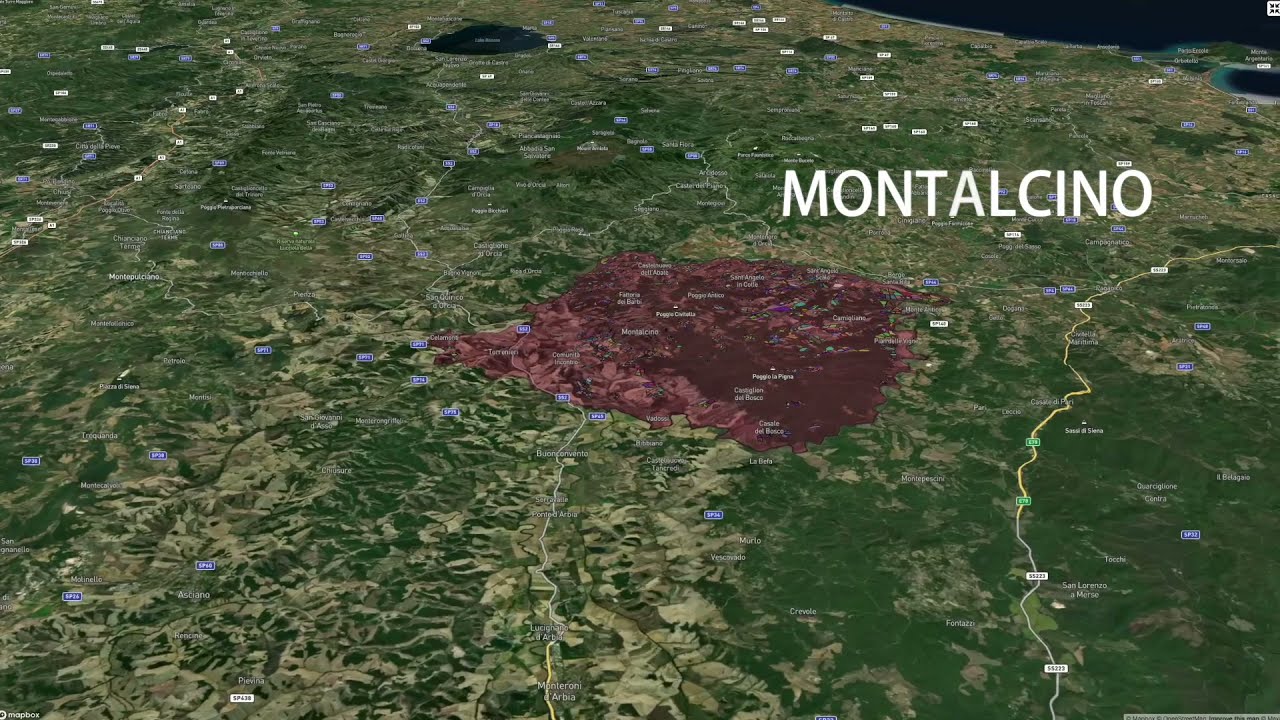
Today we fly over one of the most charming territories of Italy, which is part of UNESCO World Heritage: Montalcino. The name stems from Latin “Mons Ilcinus”, literally “Mount of Holm oaks”, home to many Etuscan finds which are evidence of the long tradition in wine-making of this area.
It’s a very peculiar and diverse region, which is made up of woods, arable land and where the vineyards cover just one fifth of the total area. The vineyards are only 40 km – as the crow flies – apart from the sea.
The presence of the Tyrrhenean sea and the protection offered by the Monte Amiata against downpours are favourable to the vines, which can benefit from a Mediterranean climate. However, the sometimes-great differences in altitude can create microclimatic conditions that vary a lot from one zone to another.
The conformation of the hills and the different geological influences have produced soils that, in the lower parts, are loose with an active layer at the bottom. However, as you go up, the soil becomes more poor and lean, leaving space for the geological formations of “galestro” and “alberese”. It is in these peculiar conditions that the main grape variety, the Sangiovese Grosso (aka “Brunello” by the locals), plunges its roots.
If you’re eager to plunge into the Montalcino region and many other fine wine areas, try our 3D Wine Explorer. Get a 7-day free trial at: