
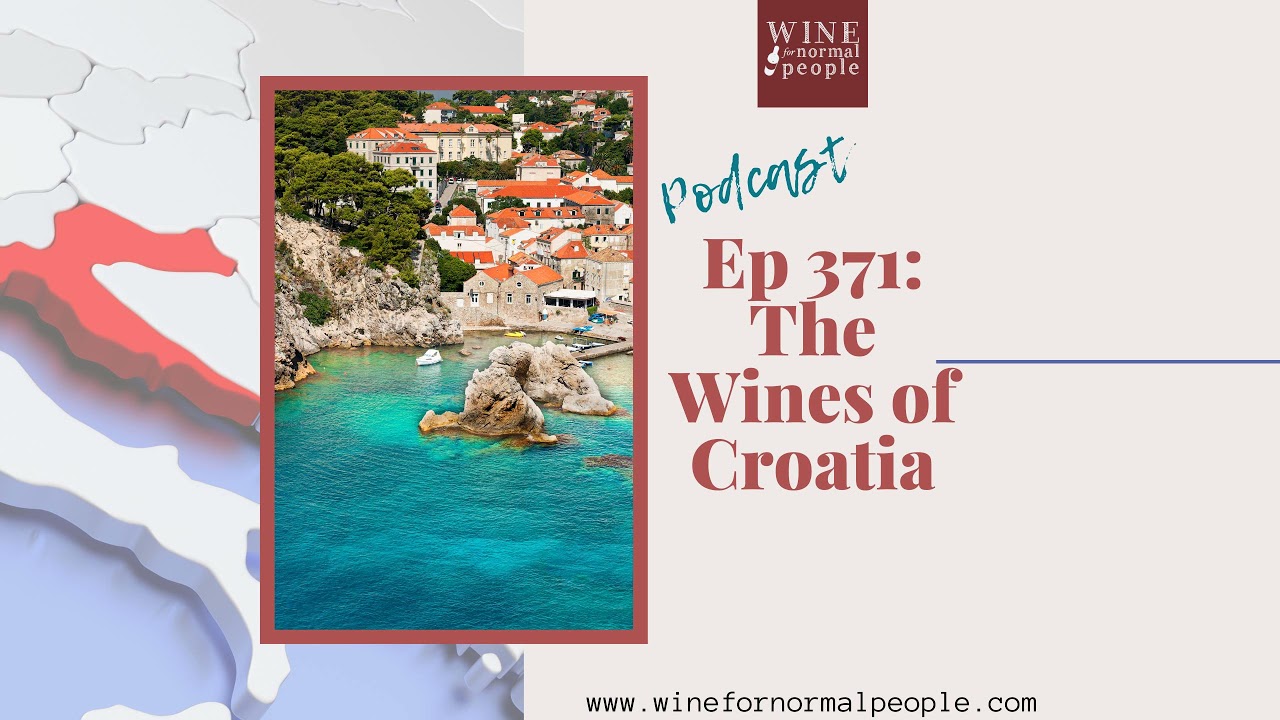
Croatia is a small country with unlimited wine potential. With a 2,500-year history of winemaking, this beautiful nation has coast, islands, and inland hills, all with unique soil types that make its growing conditions unlike anywhere else in the world. The four main regions make distinctive wines using indigenous grapes and although the industry is just getting back on its feet after a century of war, socialism, and poor viticulture, Croatia is a country on the ascent, and one you should know about!
Dubrovnik in Dalmatia
These show notes really have to be a list of places and grapes, to help you figure out what the heck we were saying on the show. So here it is, as promised:
Source: Croatian Chamber of Economy and Croatian Premium Wine Imports
Continental/Inland areas
Croatian Uplands: The cool, hilly areas around the nation’s capital of Zagreb
Whites: Muscat, Pinot Blanc, Pinot Gris, Sauvignon Blanc, Riesling, Chardonnay, Furmint (Hungary’s grape used for Tokaji, known as Pušipel or Moslavac), Škrlet (like Grüner Veltliner) Sparkling wine production using traditional method with long lees aging Reds: Pinot Noir, Purtugizec (Blauer Porturgieser)
Slavonia: A flatter area that goes east from Zagreb to where the Danube hits Serbia. It has Gently rolling hills but the area is famed from the Slavonian oak for (especially Italian) barrels.
Whites: Graševina (grah-shay-VEEN-ah) – Croatia’s most planted white variety, Traminac (Gewürztraminer) in warmer sites Reds: Frankovka (Blaufränkisch) for still and sparkling wines
The Dalmatian Coast and Istria
Dalmatia and Croatia’s Islands: The southernmost region of Croatia, the area has a mild Mediterranean climate – with dry, hot summers, mild winters with rain. This is the big tourist area, it lies on the coast and includes Split and the city of Dubrovnik (the city of King’s Landing in the HBO Show “Game of Thrones.” Yes, I did read all 6 books).
There is island viticulture here and we mention some specific places: Brač, Vis, Korčula, Hvar (where the world’s oldest continuously cultivated vineyard can be found at Stari Grad Plain). Also home to the great wines of the Peljesac (pell-yer-shatz) Peninsula
Whites: Pošip (po-SHIP) Vuguva (VOO-gah-vah) Maraština (mar-ahsh-TEEN-a) Debit Grk Reds: Crljenak Kastelnski (serl-YEN-ick casht-el-EN-ski)/Tribidag (regional name for same grape) Babić (bab-ICH) Plavac Mali (plaa-VAHTZ mah-lee) — From Postup and Dingač (where Miljenko (Mike) Grgić was born)
Istria is the dynamic, outward looking, northern-most wine region. Throughout history it belonged to Austria, Italy, and Yugoslavia and that means it has a influences in food and wine from these nations. Istria has a Mediterranean climate, like Dalmatia but it is slightly cooler. It has rocky soils, rolling hills, and iron rich red soils (terra rossa like the Coonawarra of South Australia).
Whites: 2/3 production is the Malvazija Istarska grape (Malvasia Istriana in Italy) Žlahtina (zh-LACHK-teen-ah): grown only on the island of Krk (KIRK), with citrus and pear notes, soft round textures and low acidity Reds: Native red variety Teran – acidic, aromatic medium to full bodied reds, best on clay-based terra rossa soils. Also great for Merlot, Cabernet Sauvignon, and the native varieties. Also Refošk. Good wine tourism here
Grape Descriptions
Whites
Graševina: Welschriesling, Laški Rizling, Riesling Italico, Olasz Riesling): Croatia’s most planted white and grape variety overall
Best in continental climate on the plains of Slavonia Styles range young, fresh, saline, and grassy when aged in neutral vessels Oak-aged with floral, peachy, apricot notes and a fuller body. Can age well, can be dry or off-dry, sparkling, botrytized, ice wine. Part of Gemišt, a mix of Graševina with sparkling water
Malvazija Istarska: Malvasia grown in Croatia with no relation to the Malvasia from Greece or Italy. Croatia’s second most-planted variety, can reflect terroir well
Istria’s big grape –representing more than 50% of all their whites Styles: Fermented and aged in stainless steel – floral, honey, apple, pear notes, with lower acidity, salinity With extended skin contact and barrel aging — full-bodied white or orange wine Experimentation with oak, concrete, amphora, skin contact is becoming common
Whites of Dalmatia
Pošip: Originally from the island of Korčula (CORE-chu-lah) where it was shielded form phylloxera as it grew on sandy soils. It also grows on the Pelješac Peninsula and on Brač and Hvar, and other islands
The wine is aromatic, herbal, grassy, and acidic. Can be oaked, aged on the lees, huge styles, passito for region’s traditional sweet wine Prošek
Debit is like minerally Sauvignon Blanc but with more lime than grapefruit flavor….