
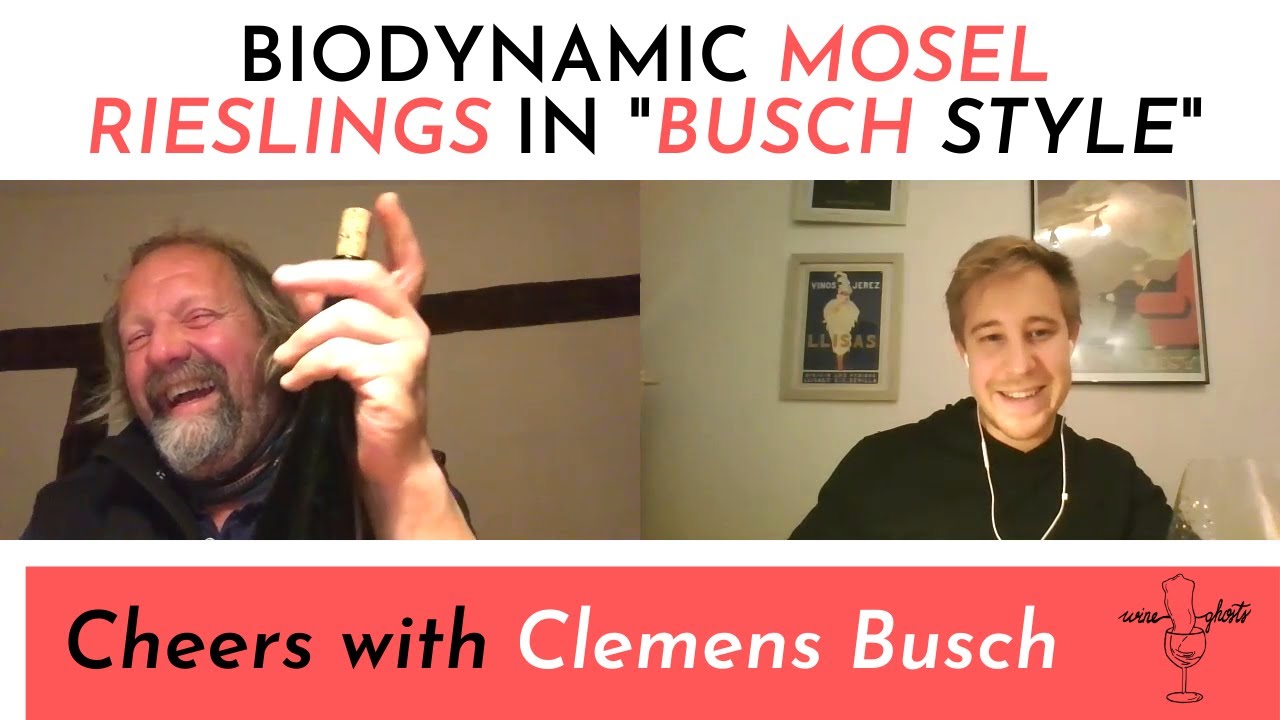
There is a winery in the tiny village of Pünderich at the fringe of the Middle Mosel and the steeper Terassen Mosel, bearing the name of an experienced, benevolent winemaker: Clemens Busch. Mr. Busch started to work organically more than 40 years ago and was one of the founding fathers of the ’first group of organic producers in Germany’, which was a requisite step towards the biodynamic revolution seen amongst some of the best producers in the country these days. The majority of his wines are still ungrafted, terraced and a number of them have even heard the cannons during the First World War. The Busch wines don’t follow the anticipated Mosel taste, but rather expresses the unmatchable “Busch-style” from all three major slate profiles found in the Mosel region. I’ve had one of the best Rieslings in my life during this conversation, so I urge you to find yours in the Busch portfolio and stock up on them for your grandchildren.
0:00 – Where do the Busch vine grow?
1:58 – Difference between Terassen Mosel and Moddle Mosel?
3:20 – Soil, Minerality and its effects on the final wine
8:17 – Biodynamics, Fruit quality
14:42 –Biodynamics Revolution in the Mosel
26:43 –Differences between Organics and Biodynamics
29:15 – 501 and Bringing energy
31:56 – Convince me about working with the Moon!
36:05 – Biodynamics is going back to normality?
40:10 – The Cupper Controversy
44:45 – Red Slate Riesling
48:00 – Blue Slate Riesling
50:41 – Working with old vines
58:12 – The Case of Sulphur
1:05:48 – How can wines last for decades?
1:10:00 – Fahrlay Dreams
1:13:39 – Vintage Development & Vintage Tips
1:17:37 – Fahrlay 2013
1:21:43 – What Clemens looks for in a great wine?
1:26:07 – What is gonna change in 5 years?
1:29:33 – How did Clemens Busch change in this process?
1:37:11 – Sparkling Wien and Ciao
Guest: Clemens Busch
Winery: Clemens Busch Winery | Mosel
Wine Ghosts’ Channels (Instagram, Podcast etc.):
Wine Ghosts Website: www.wineghosts.com
Wine Ghosts’ E-Mail: infowineghosts@gmail.com
#wineghosts #clemensbusch #mosel