
Ciao!
My name is Vincenzo.
I would like to show you how to cook Italian pasta.
It seems to be a simple thing , but I have seen a lot of monstrosities on the web and traveling around the world.
You can have the best seasoning ever but if the pasta is not perfectly cooked you can throw it all away
So, since it is the basis of Italian cuisine, we’ll focus on some fundamental concepts, once and for all!
What kind of pasta to buy?
Pasta made in Italy preferably!
Remember, having an Italian name doesn’t mean necessarily made in Italy.
If you can’t find it, make sure to buy “pasta di semola di grano duro”, durum wheat pasta. This is mandatory!
How much pasta to cook?
It very depends! Let’s say that there is a medium range from 80 to 130 grams per person. But I usually eat not less than 180 grams, for example, because I’m a pasta addicted!
How much water?
It depends on the quantity of pasta. Generally water should be three centimeters above the pasta. So you need a pot big accordingly.
For example, for 150g (0,3 lb) I use a pot like this,
until 300g (0,6 lb) a pot like this
until 1 kg (2,2 lb) a pot like this
until 2 kg (4,4 lb) a pot like this.
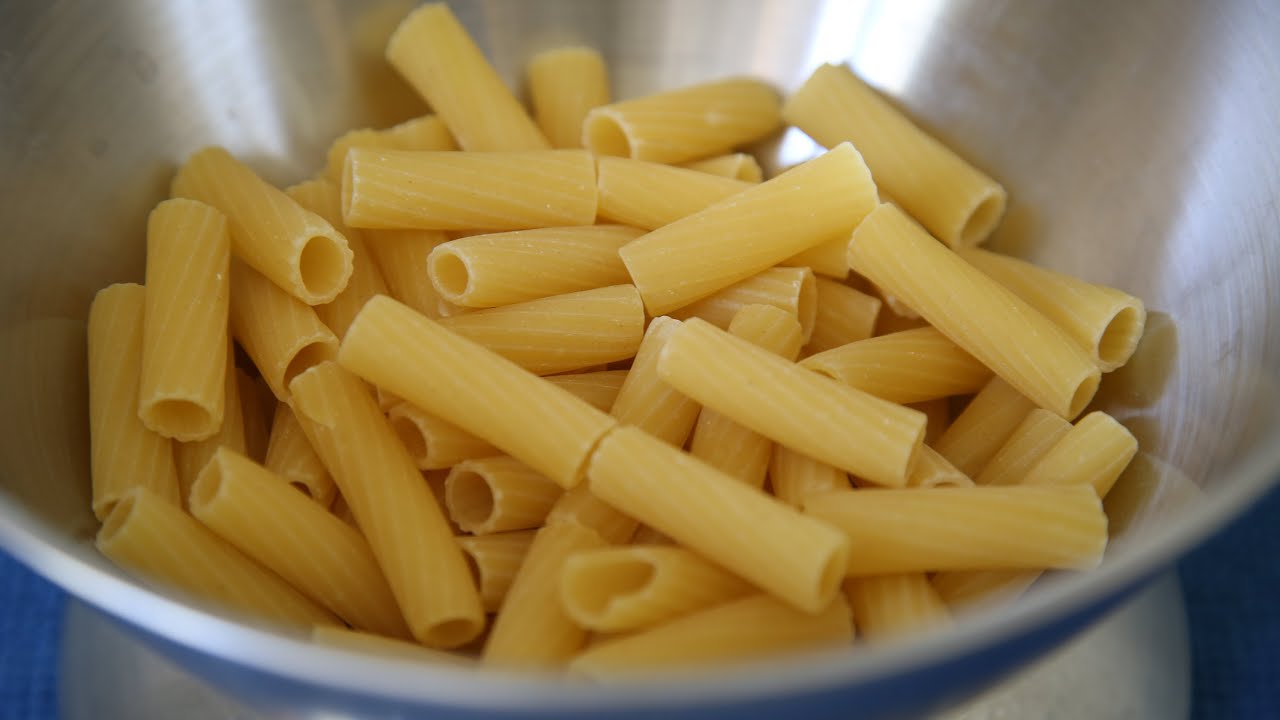
Let’s cook 250 grams of pasta.
Fill the pot with tap water, more or less 2 liters.
put it over high heat. You can cover it with a lid for the first few minutes to speed up the boiling of the water.
While the water is on the fire let’s talk about the salt
How much? The quantity of salt depends on the quantity of water. The general rule says that we should add 10 grams of salt per liter of water. Fair enough.
By experience, we usually use the palm of our hand to measure it. That’s why we use to say “un pugno di sale” a handful of salt as a unit of measure and “un pizzico di sale”, a pinch of salt is its sub-unit. For this water I would use this amount of salt and in fact this quantity is perfect.
Some says that salt must be added before the water boils, some after. The truth is that it doesn’t make any difference. You can add salt at any stage but, remember, you can never subtract it. That’s why if you’re not sure of the quantity, less salt is better than too much.
You can always correct the pasta if it is insipid. Never the opposite.
Let’s say that we add the salt just before the water boils and just before to put the pasta, ok?
When the water boils (and not before!!), we can “calare la pasta”, put the pasta on.
How long does pasta have to cook?
If you drain the pasta a little ahead of time, it will be “al dente”.
If you drain the pasta beyond the cooking time, your pasta will be “scotta”.
Consider that at this world there is nothing worst than serving an overcooked plate of pasta.
I repeat: it is of utmost importance not to overcook pasta!
“Al dente” is a quality, “scotta” is crime.
The cooking time is indicated on the pack.
You can trust it if you’re using a made in Italy pasta brand, such as Barilla or De Cecco and so on, or a durum wheat pasta .
If not, do not risk and drain it a couple of minutes before.
Once it’s ready, place a colander in the sink and drain your pasta.
Now you can season it, as fast as you can before it sticks.
Enjoy!