
►►► Subscribe free:
London
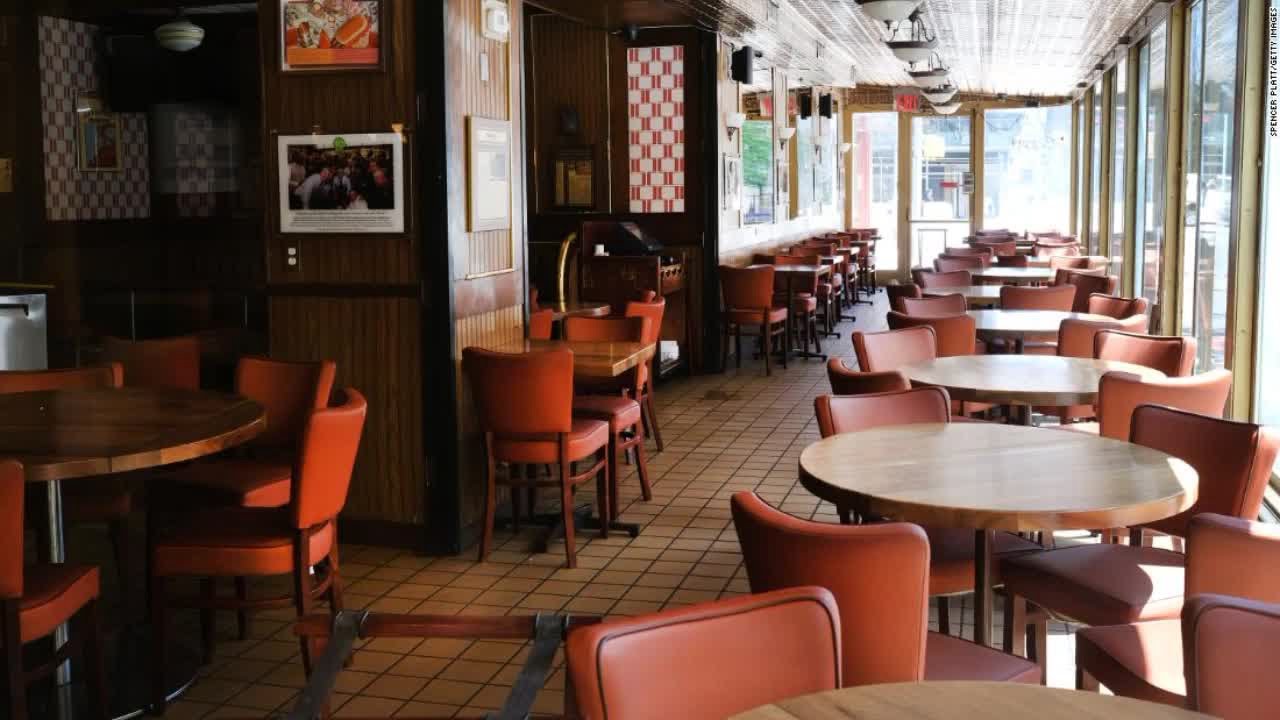
The US state of Georgia allowed restaurants to reopen on April 27. The three owned by Ryan Pernice are still shuttered.
The entrepreneur hasn’t opened his restaurants, Table & Main, Osteria Mattone and Coalition Food & Beverage, since March 16. Pernice is worried about the health of his employees and customers, but there’s another reason the restaurants are still shut down: They can’t make a profit with social distancing rules in place.
“If you talk to restaurants across the globe, the language might change, but the math is the same,” Pernice told CNN Business. “Restaurants and bars need volume and traffic to make them work.”
Pernice has been forced to lay off or furlough 80 of his 120 staff. Around the world, millions more restaurant and bar workers have lost their jobs as countries impose strict lockdowns designed to contain the pandemic. Some of those restrictions are now being eased, but restaurants and bars are not being prioritized for reopening because they are viewed as venues where the virus might spread.
Restaurant owners and managers are grappling with the brutal math that underpins their industry. Margins are razor thin, forcing eateries and bars to pack in customers every night, and especially on the weekends, in order to stay afloat. In the toughest markets, that means multiple waves of guests, and tables that are pushed together as closely as possible.
It’s a business model that is simply not compatible with social distancing.
“There will be no profits for us while we are social distancing,” said Blaiss Nowak, another Georgia restaurateur who chose to reopen when restrictions were lifted last month. “There are a great amount of restaurants that I’ve heard will never open again.”
.m-infographic–1589299616397 { background: url(//cdn.cnn.com/cnn/2020/images/05/15/timeline-03-nowaks_375px.gif) no-repeat 0 0 transparent; margin-bottom: 30px; padding-top: 194%; width: 100%; -moz-background-size: cover; -o-background-size: cover; -webkit-background-size: cover; background-size: cover; } @media (min-width: 640px) { .m-infographic–1589299616397{ background-image: url(//cdn.cnn.com/cnn/2020/images/05/15/timeline-03-nowaks_780px.gif); padding-top: 68%; } } @media (min-width: 1120px) { .m-infographic–1589299616397{ background-image: url(//cdn.cnn.com/cnn/2020/images/05/15/timeline-03-nowaks_780px.gif); padding-top: 68%; } }
Nowak has reduced the number of customers in his restaurant from 200 a night to just 50, with tables spread 12 feet apart. The main dining area, which used to accommodate 60 people at a time, is now limited to 24. He hopes that by opening now, his employees will be trained to deal with social distancing when customers feel more safe returning to eat.
Some restaurateurs say they will remain closed rather than open with reduced seating. New York restaurant operator Union Square Hospitality Group laid off around 2,000 people in March and its CEO, Danny Meyer, said last week that he doesn’t expect customers to return until a vaccine is found. (There’s no guarantee that will happen.)
“There is no interest or excitement on my part to having a half-full dining room while everyone is getting their temperature taken and wearing masks, for not much money,” he told Bloomberg News.
.m-infographic–1589557595213 { background: url(//cdn.cnn.com/cnn/.e/interactive/html5-video-media/2020/05/15/Restaurants_line_375px.png) no-repeat 0 0 transparent; margin-bottom: 30px; padding-top: 153.79494007989348%; width: 100%; -moz-background-size: cover; -o-background-size: cover; -webkit-background-size: cover; background-size: cover; } @media (min-width: 640px) { .m-infographic–1589557595213{ background-image: url(//cdn.cnn.com/cnn/.e/interactive/html5-video-media/2020/05/15/Restaurants_line_780px.png); padding-top: 66.6880204996797%; } } @media (min-width: 1120px) { .m-infographic–1589557595213{ background-image: url(//cdn.cnn.com/cnn/.e/interactive/html5-video-media/2020/05/15/Restaurants_line_780px.png); padding-top: 66.6880204996797%; } }
That sentiment is widespread. In Italy, thousands of restaurant owners have protested the government’s proposed social distancing measures, which are due to take effect when eateries are allowed to reopen on June 1.
“This restaurant is the love of my life, but my preference is not to open,” said Mario Firpo, owner of Gennaro Esposito Milano, a pizzeria in Milan. He estimates the restaurant’s capacity will fall by nearly 70% if he’s forced to keep tables two meters apart.
Firpo is part of a movement of Italian restaurateurs protesting online and in the streets under the hashtag “Io non apro” or “I do not work,” while others use the banner “Risorgiamo Italia,” or “Italy Rises Again.”
.m-infographic–1589531145091 { background: url(//cdn.cnn.com/cnn/2020/images/05/15/timeline-01-milan_375px.gif) no-repeat 0 0 transparent; margin-bottom: 30px; pa
Click Subscribe to receive the latest news free